What oak cabinet refinishing actually is
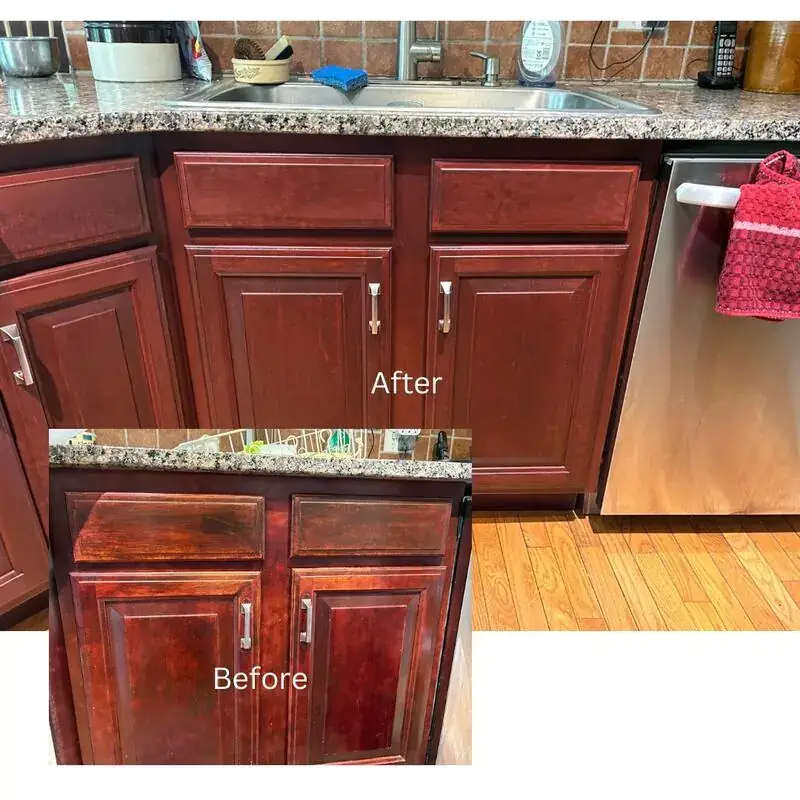
Refinishing oak cabinets is mostly about renewing the finish, not stripping everything to bare wood. On a typical job we clean and degrease, scuff the surface, repair worn spots, bring everything back to an even base color, and then build the color you want with toners before sealing it all under fresh protective topcoats. The oak grain stays — refinishing celebrates that grain rather than hiding it.
This is the right path if you've always liked your oak cabinets but the finish has gone orange, yellow, or dull. You keep the real wood and the grain pattern; you just trade the dated cast for a current, designer-level tone.
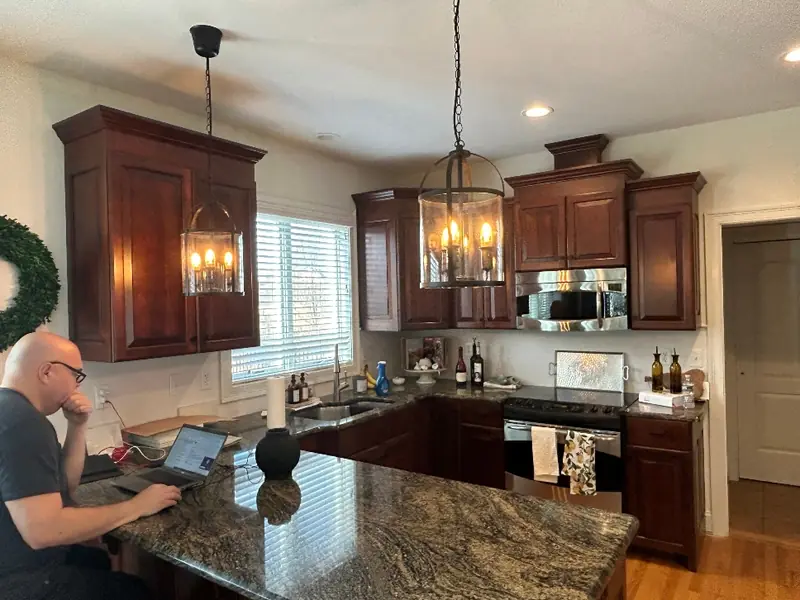
The oak refinishing process, step by step
Here's how a real oak refinishing job goes, in order:
- Clean and degrease. Years of cooking oils and hand contact have to come off first, or nothing bonds properly.
- Scuff the existing finish. This gives the new coats something to grip — without stripping to bare wood.
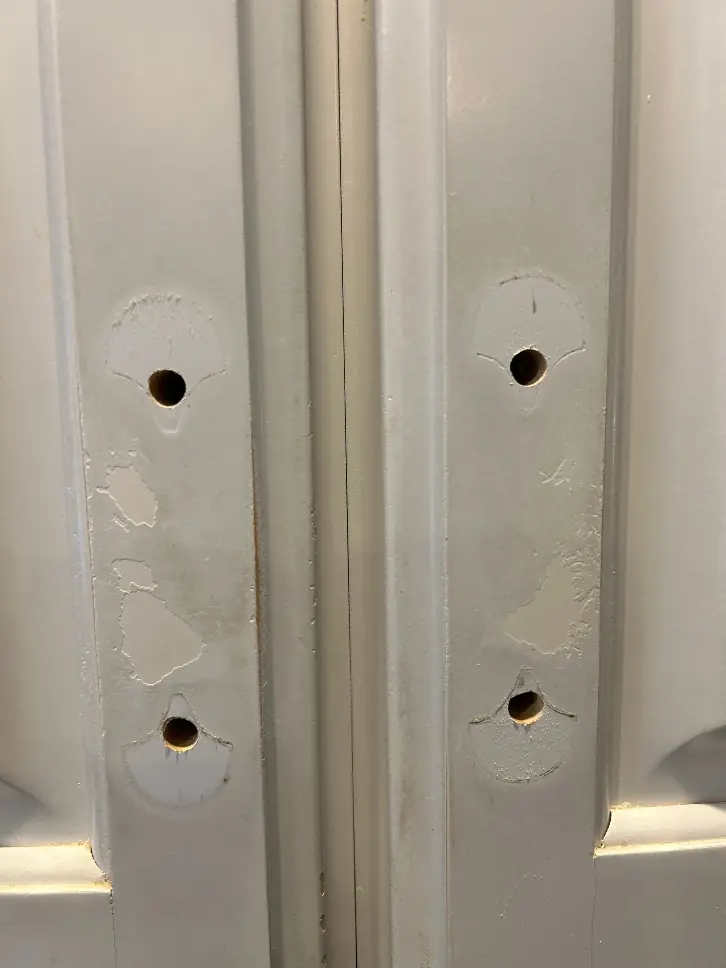
- Repair worn spots. The areas around handles and the sink take the most abuse and get addressed here.
- Bring everything to an even base color. Doors, drawer fronts, and boxes are leveled to one consistent starting tone.
- Add toners for the final shade. Toners build the color you want on top of that base.
- Seal with protective topcoats. Durable clear coats lock in the color and protect the wood.
How toner works — and why undertone matters
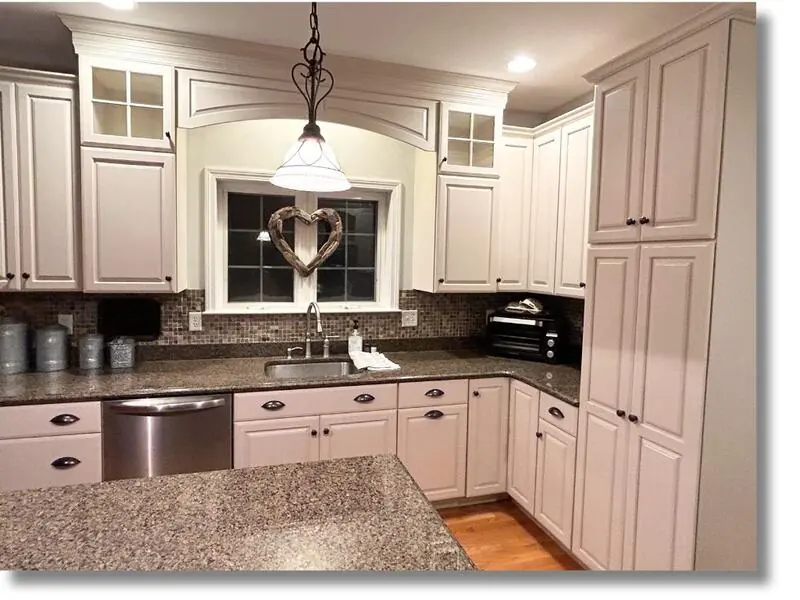
This is the part homeowners most often misunderstand. A toner builds on top of your existing color; it doesn't erase it. Every toner reacts a little differently because it's layering over whatever is already there. So if your oak has a reddish undertone, that warmth tends to carry through — unless you go very dark.
That leads to the single most important rule of refinishing:
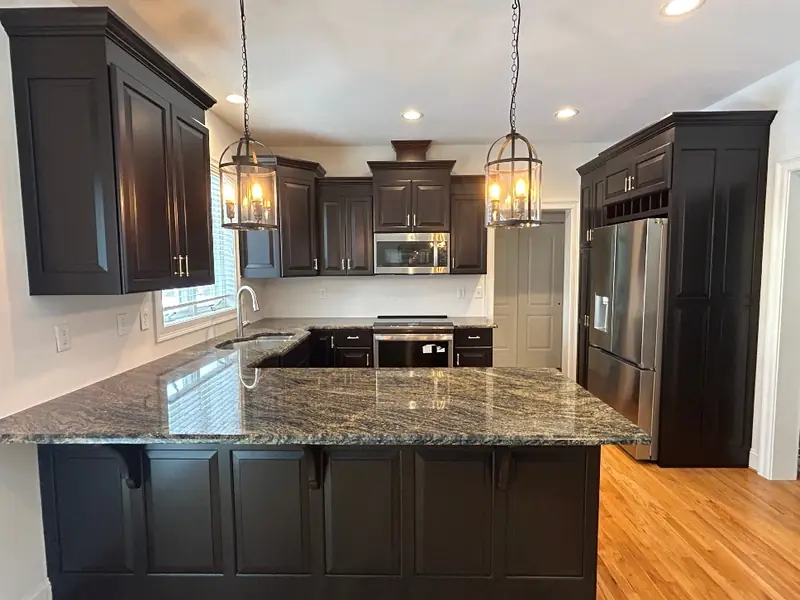
Refinishing can go the same tone or darker — never lighter. Toning honey oak into a deeper walnut, gray-brown, or espresso works beautifully. Making oak lighter than it is now isn't possible with stain. To go lighter you'd reface with new natural or lightly stained wood, or paint.
Color, sheen, and the topcoat
Most oak refinishing customers land on a matte or eggshell sheen — measured by number, somewhere around 10 to 20, which reads as a soft, current finish that's neither glossy nor dead flat. It's the look that feels right on today's kitchens.
The protective topcoats are professional-grade 2K clear coats — the same durable, water- and scratch-resistant chemistry we use across our finishing work. That's what lets a refinished oak kitchen stand up to years of daily cooking and cleaning.
How long oak refinishing lasts — and the timeline
A properly refinished oak kitchen typically holds up for 8 to 15 years before it needs attention again, depending on how hard the kitchen is used. Most projects wrap in 5 to 8 days, since we're renewing the finish rather than stripping to bare wood and starting over.
Setting the right expectation
One honest thing we tell every refinishing customer: expect an 80–90% improvement, not absolute perfection. Refinishing renews real, used wood — it's a dramatic, designer-level upgrade, but a refinished door isn't a brand-new factory door. Going in with that expectation, almost everyone is thrilled with the result.
When refinishing oak isn't the right call
Refinishing is the best value for most oak kitchens, but not all. It's the wrong tool when:
- You want it lighter. Stain only goes same-tone or darker — lighter means refacing or painting.
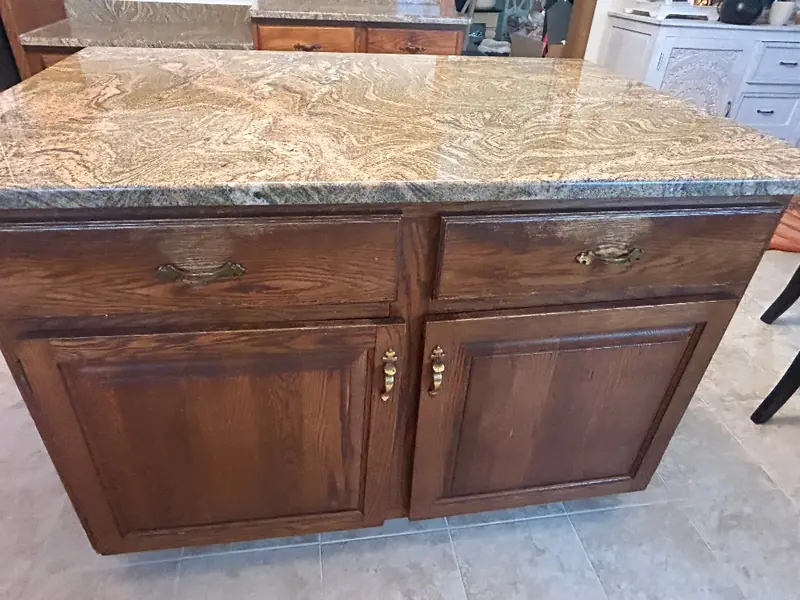
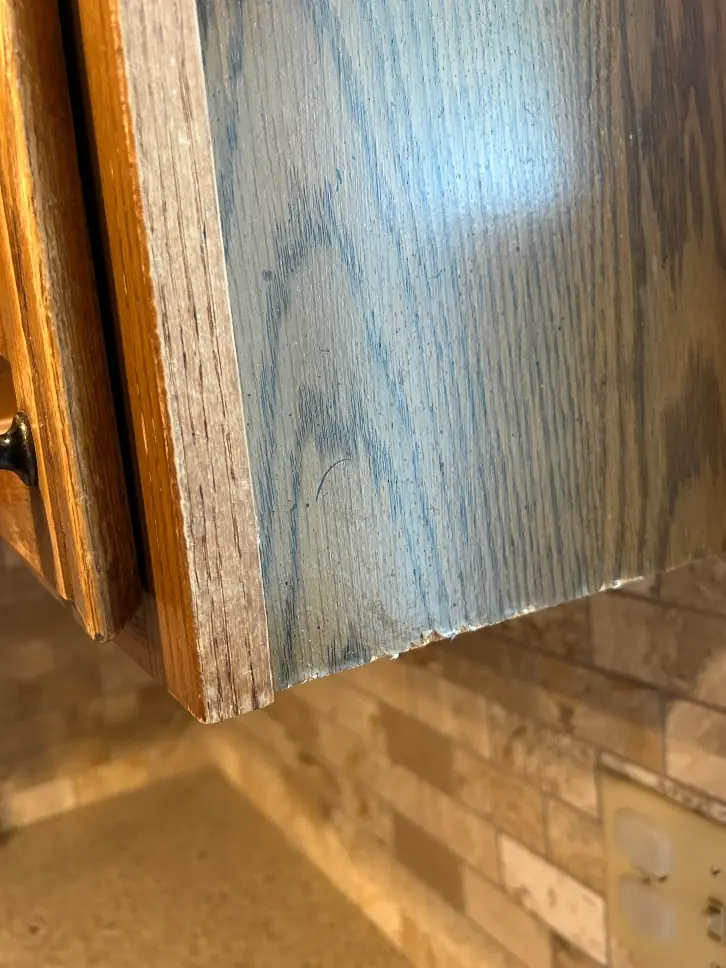
- There's water damage. Water discolors wood and can be hard to restore evenly — unless you're going dark enough to cover it. Heavily damaged doors are better replaced.
- The damage is extensive. When doors or veneer are too far gone, refacing with new veneers and new doors gives a cleaner result than fighting the old wood.
Refinish, reface, or paint your oak?
Refinishing is one of three ways to update oak — here's the quick comparison:
| Approach | Keeps the wood grain? | Can go lighter? | Best for |
|---|---|---|---|
| Refinishing | Yes | No — same or darker | Loving the wood, updating the tone |
| Refacing | Yes (new wood) | Yes | Going lighter or changing door style |
| Painting | No | Yes | A solid color, covering the grain |
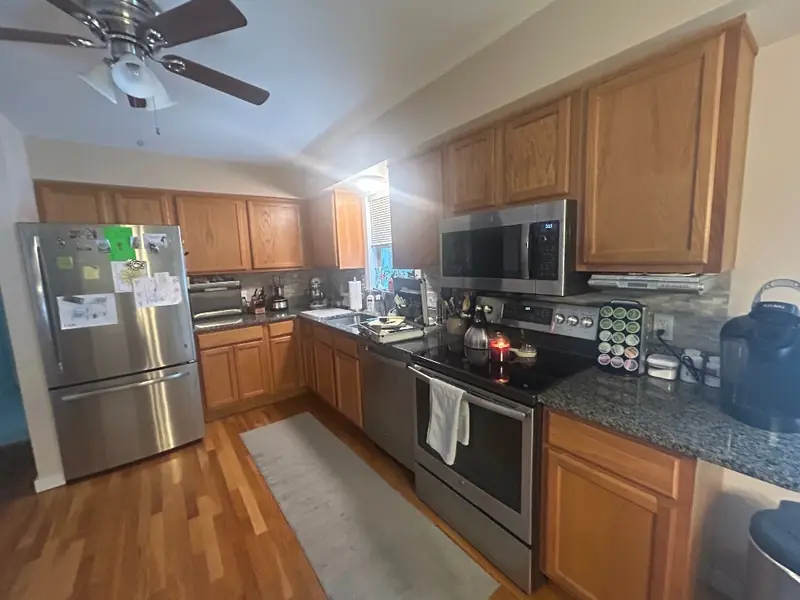
For the full breakdown of all the ways to modernize oak, see our guide on how to update oak cabinets.
Wondering if your oak cabinets are a good refinishing candidate? Send Raymond a few phone photos and he'll give you an honest read in a free 15-minute call. Schedule a call →
Frequently asked questions
Can you refinish oak kitchen cabinets without stripping them?
Yes — in most cases. Oak refinishing is mainly finish renewal: clean and degrease, scuff, repair worn spots, even out the base color, add toners, and seal with fresh topcoats. We only strip to bare wood when the existing finish is failing or peeling, which is the exception, not the rule.
Can you make oak cabinets lighter by refinishing them?
No. Toners build on the existing color, so refinishing goes the same tone or darker — never lighter. A reddish undertone usually carries through unless you go very dark. To genuinely lighten oak you reface with new natural or lightly stained wood, or paint.
What sheen is best for refinished oak cabinets?
Most customers choose a matte or eggshell sheen — around 10 to 20 on the sheen scale. It reads soft and current, not glossy and not dead flat, and it suits the look of today's kitchens.
How long does refinished oak last?
With professional 2K protective topcoats, a refinished oak kitchen typically holds up 8 to 15 years depending on use. Most projects take about 5 to 8 days since we're renewing the finish rather than stripping to bare wood.
Will my refinished oak cabinets look brand new?
Expect an 80–90% improvement rather than absolute perfection. Refinishing renews real, used wood — it's a dramatic, designer-level upgrade, but a refinished door isn't a factory-new door. Set that expectation and almost everyone is delighted with the result.
What if my oak cabinets have water damage?
Water discolors wood and can be hard to restore evenly unless you're going dark enough to cover it. Light water marks can often be blended; heavily damaged doors or veneer are usually better replaced through refacing.