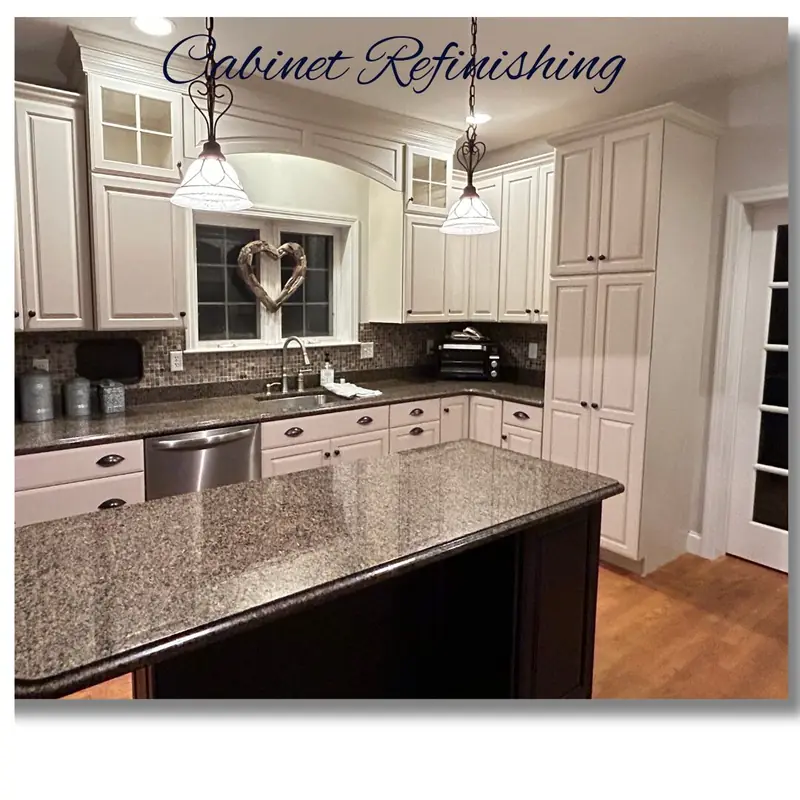
Love the wood grain on your solid-wood cabinets — just hate how worn they look? Professional cabinet refinishing repairs the wear, renews the color in the same tone or deeper, and seals everything under durable new protective topcoats. Keep the cabinets you have. Make them look new again in 5–8 days.
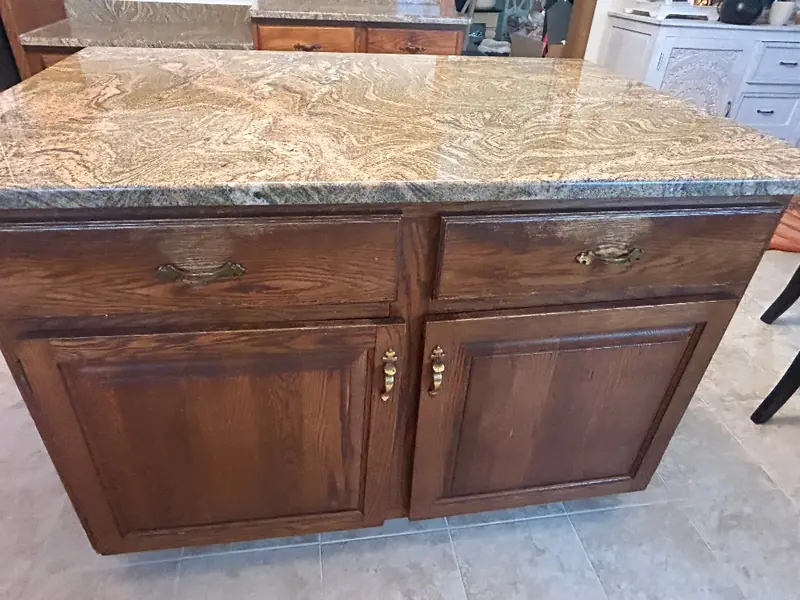
Worn finishes, sun-faded color, water marks, and dull, tired-looking wood are the most common reasons homeowners across Western Massachusetts look for professional cabinet refinishing — and they're all fixable.
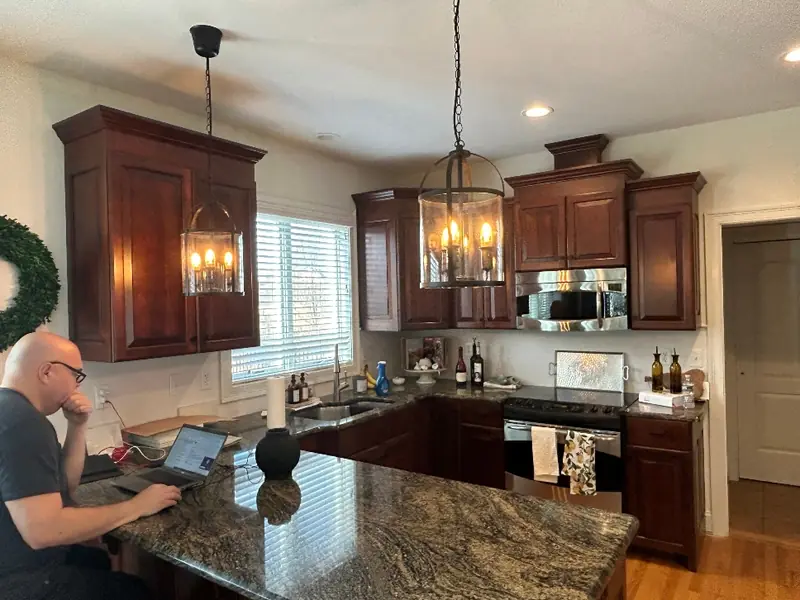
These are exactly the kinds of problems professional cabinet refinishing — careful repair, color blending, and durable new protective topcoats — is built to solve.
Get a Free Quote →Before-and-after results from cabinet refinishing, refacing, and painting projects across Western Massachusetts — Springfield, Chicopee, and the Pioneer Valley.
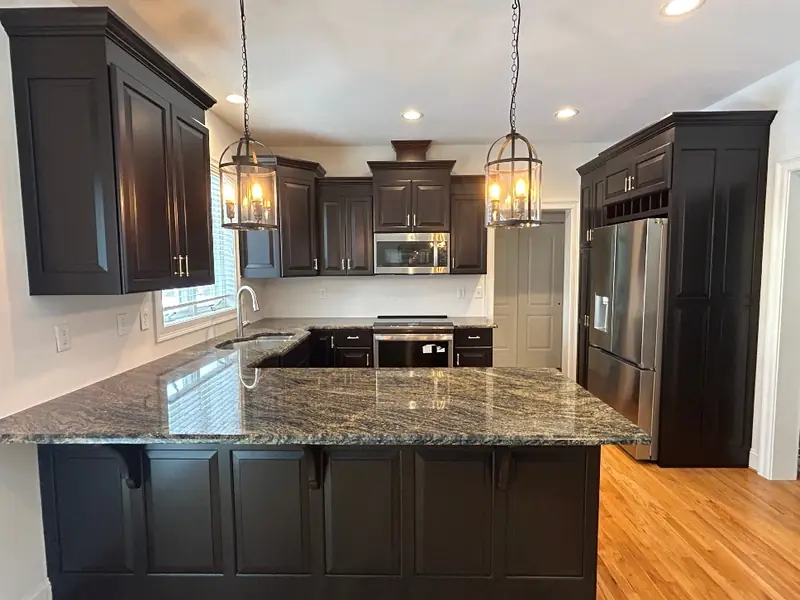
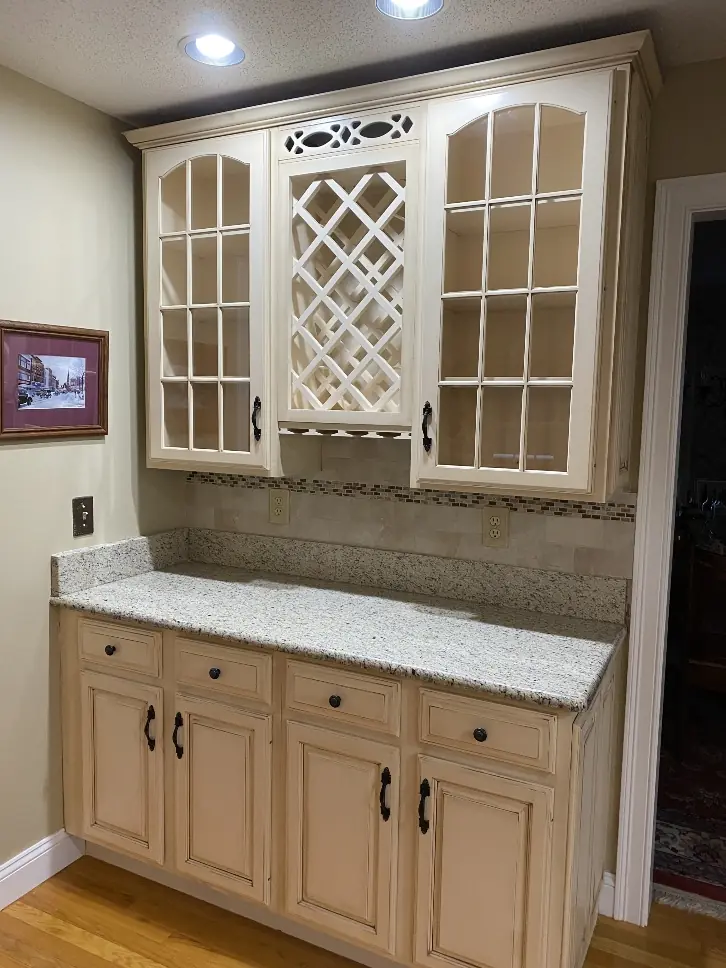
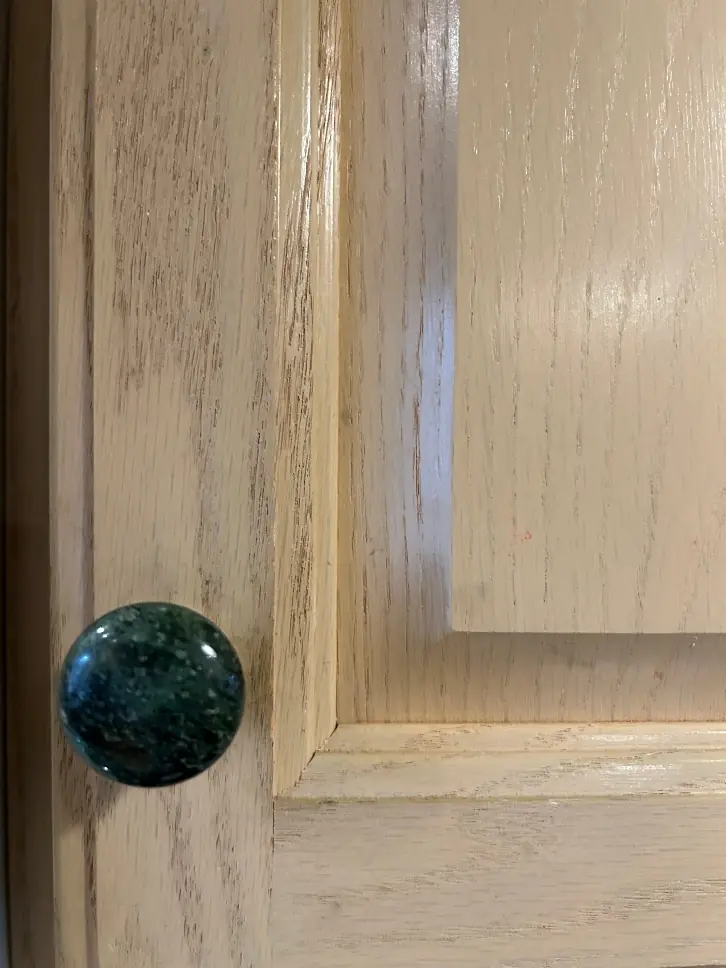
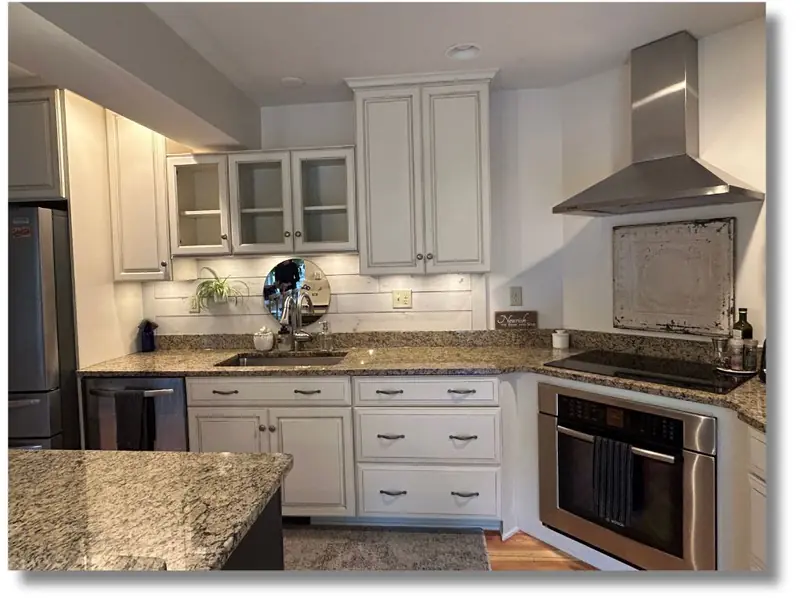
A tired, faded finish renewed with a rich espresso tone and durable protective topcoats — the wood grain stays front and center.
Cabinet Refinishing
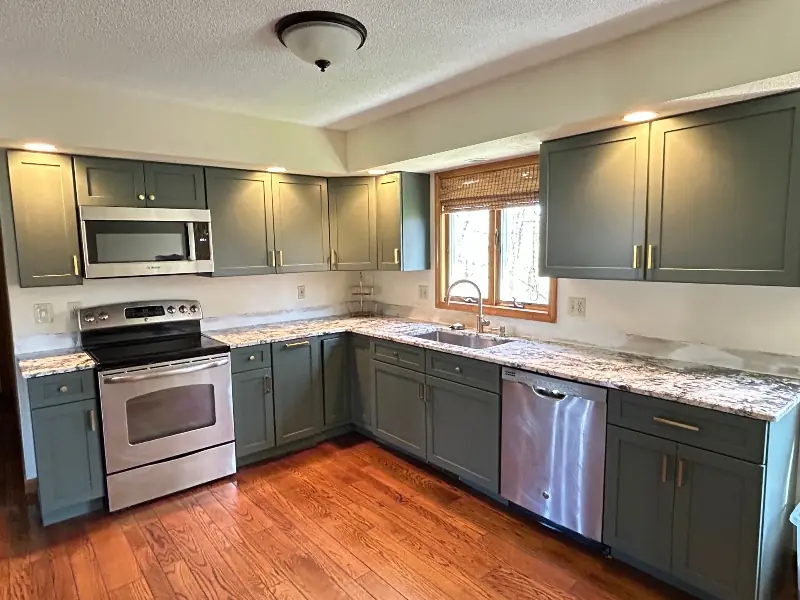
Heavy honey oak transformed to a modern green shaker style. When refinishing alone isn't enough, refacing replaces the doors and updates the whole look.
Cabinet Refacing
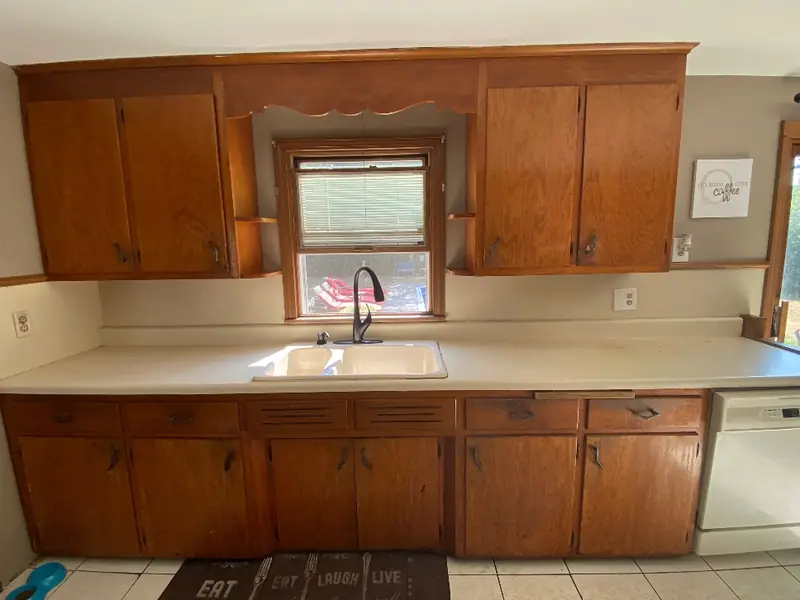
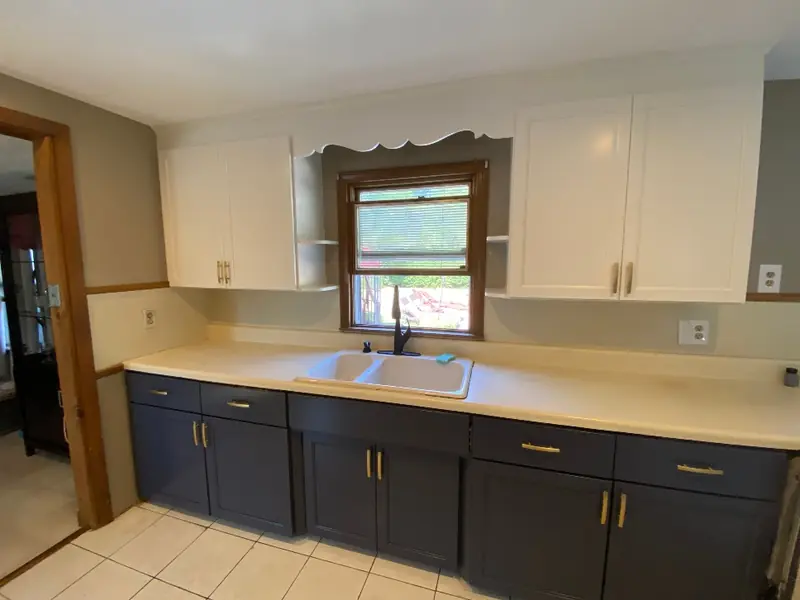
Complete cabinet update serving the Springfield area — new doors, new look, same solid boxes. When refinishing isn't enough, refacing delivers a bigger change.
Cabinet Refacing · SpringfieldCabinet refinishing is the right kitchen cabinet upgrade when the wood itself is worth keeping — solid doors, a grain you love — and the finish is the only thing showing its age.
Professional cabinet refinishing is far more involved than wiping on a coat of polish. Thorough cleaning, honest repair work, and properly applied protective topcoats are what separate a finish that lasts 8–15 years from one that dulls again within a season.
All cabinet surfaces are thoroughly cleaned and degreased before any other work begins. Kitchen grease and residue trapped beneath a new finish is the #1 cause of premature failure — this step is non-negotiable in a professional cabinet refinishing process.
Every door and drawer front is carefully removed and labeled for accurate re-installation. Each piece is inspected for scratches, dings, loose joints, and water damage so every repair is planned before finishing work begins.
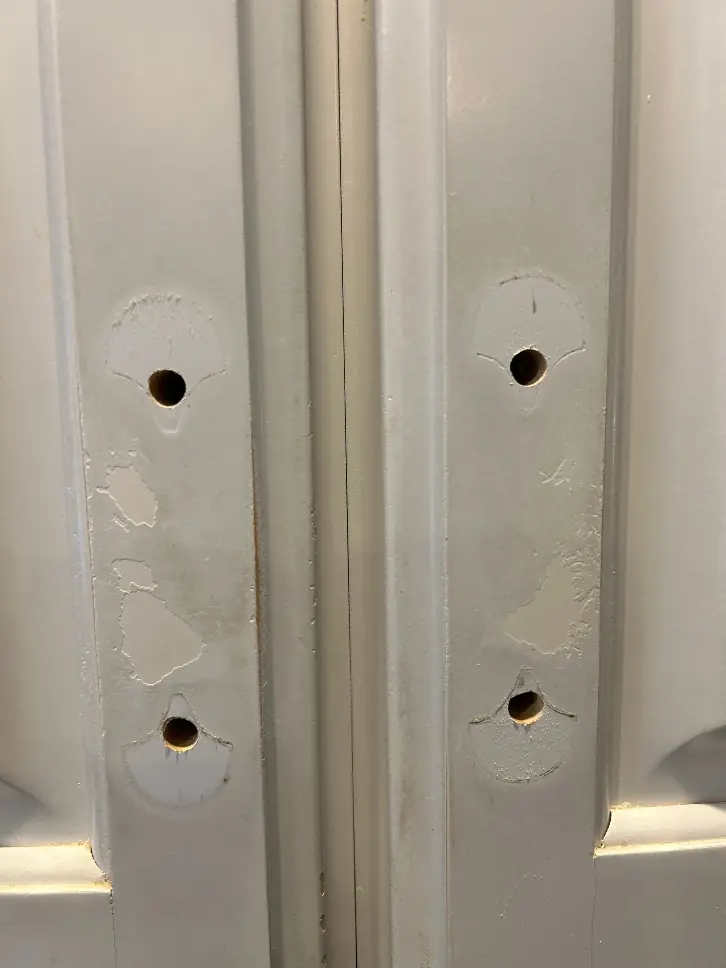
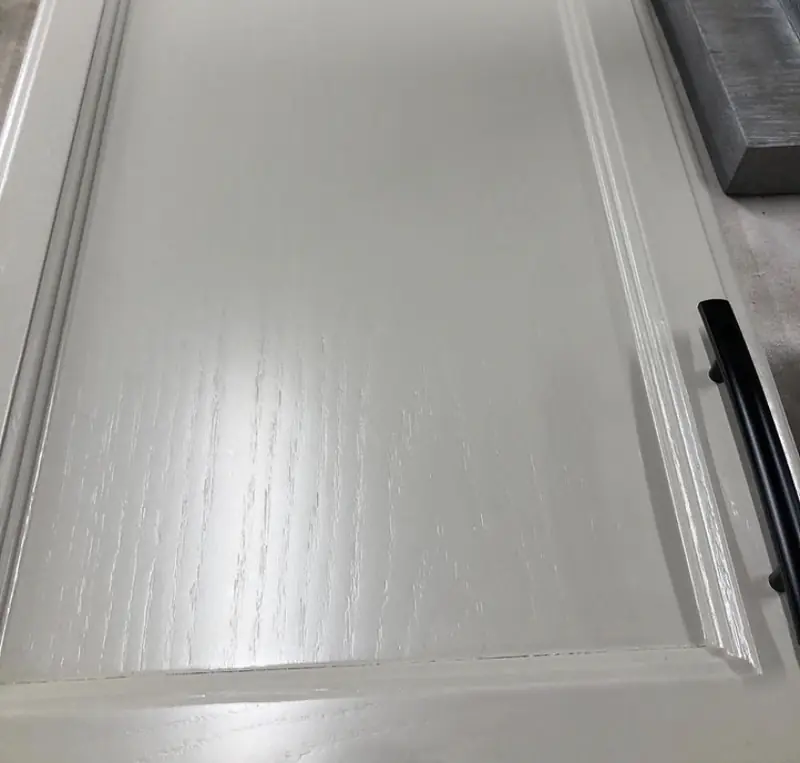
Worn spots, water marks, scratches, and faded areas are repaired and color-blended with matching stain — in your existing tone or a deeper one. This is the craftsman step that makes the renewed finish look factory-original instead of patched.
Surfaces are scuff-sanded to give the new topcoats a proper grip — without grinding away the wood character underneath. Correct adhesion prep is the foundation of a renewed cabinet finish that lasts 8–15 years instead of one season.
Doors are finished in a controlled environment for an even, factory-quality result. Cabinet boxes and face frames are masked and finished in place. Multiple coats of professional-grade clear finish seal the renewed color against daily kitchen wear.
Proper drying and curing time is observed before doors are rehung. Raymond inspects every door for finish quality, color consistency, and sheen uniformity. Hardware is reinstalled and all doors are adjusted for proper alignment.
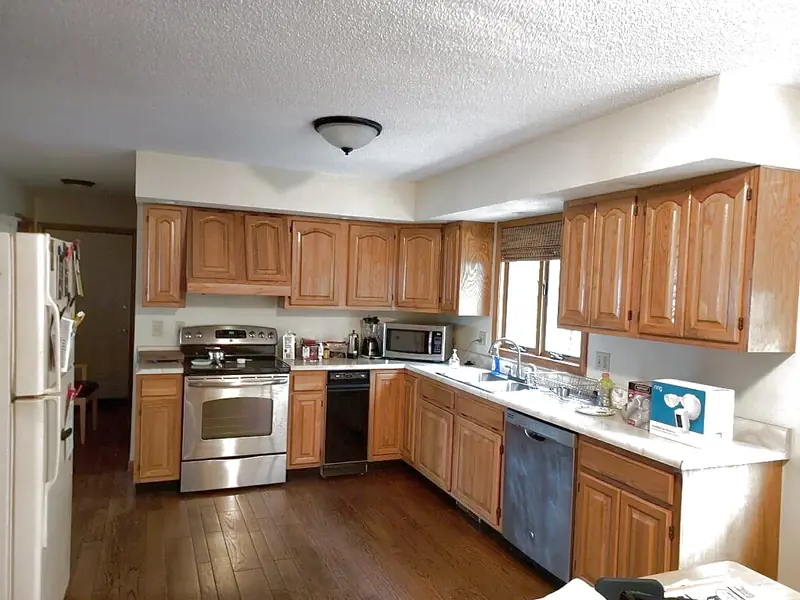
Oak is an open-grain wood with one of the most beautiful grain patterns of any cabinet species. Refinishing — done properly — celebrates that grain rather than hiding it. If you've always liked your oak cabinets but the finish has gone orange, yellow, or dull, refinishing is the right path. Here's how the three main options compare.
Repair the wear, renew the existing tone — or take it deeper into a modern walnut or espresso — then seal everything under durable protective topcoats. Preserves the grain pattern you love and trades the orange cast for a current, designer-level tone.
If you want to cover the grain entirely with a solid color, painting is the right service. Oak's open grain telegraphs through paint unless grain filler is applied — costs more than maple or birch due to additional prep.
See cabinet painting →If the door style itself is the problem (raised-panel, dated profile), refacing replaces the doors and drawer fronts with smooth shaker or slab profiles while reusing your boxes. Bigger transformation, bigger budget.
See cabinet refacing →Here's exactly what happens when you work with Homestead on a cabinet refinishing project in Massachusetts — every step, in order.
Send us a few photos of your kitchen and we'll discuss your color goals, current cabinet condition, and wood type. A ballpark range for your cabinet refinishing project is typically provided on the first call — no obligation.
Raymond visits your kitchen to assess cabinet condition, wood type, door profiles, and surface area. Together we confirm your finish direction — renew the existing tone or go deeper and darker — plus sheen level, and provide a written cabinet refinishing quote.
A small deposit locks in your start date. Lead time for cabinet refinishing is typically short — scheduling and prep move quickly compared to custom cabinetry or full remodel projects.
Doors are removed and labeled. All cabinet surfaces are cleaned, degreased, and scuff-sanded. Worn spots, scratches, and water marks are repaired and color-blended — proper prep is what makes a refinished surface last instead of dulling within a year.
Doors are finished in a controlled environment; cabinet boxes and face frames are masked and finished in place. Multiple protective clear coats are applied, and proper drying and curing time is observed — this step cannot be rushed without compromising durability.
Doors are rehung and aligned. Hardware reinstalled. Raymond walks through the finished kitchen with you — checking finish quality, color consistency, sheen uniformity, and door alignment before final sign-off.
Every refinishing project is quoted individually — wood species, cabinet condition, and finish choice drive the cost. Here's how project scope affects your quote — no surprises at the end.
Fewer doors, finish in decent condition, straightforward clean-repair-recoat scope. Fastest cabinet refinishing project with shortest disruption.
Average kitchen with 20–30 doors and drawer fronts — full cleaning, wear repair, color renewal, and protective topcoats throughout.
Going darker, heavily worn finishes, glass cabinets, or larger kitchens with many surfaces add repair and finishing time.
Deep scratches, water-damaged areas around sinks, and failing finishes need extra repair and blending time before the new topcoats go on. This added work is reflected in your quote.
Want a more specific cabinet refinishing cost estimate? Request a free quote — most homeowners get a ballpark range on the first call.
For all cabinet work — painting, refinishing, or refacing — the kitchen is a full work zone. Doors and drawer fronts are removed, surfaces are being finished, and spray materials require the area to remain undisturbed for proper drying and curing.
Cabinet refinishing is the perfect opportunity to address other kitchen improvements that are easier and more affordable to do simultaneously — storage upgrades, hardware, islands, and more. Many homeowners budget for one or two add-ons alongside their cabinet refinishing project.
Take honey- or orange-toned wood to a rich espresso, walnut, or deep cherry while the finish is being renewed anyway. The grain stays visible — the dated cast disappears. The single most requested refinishing upgrade.
With every door and drawer front already off for refinishing, adding soft-close hinges and new pulls or knobs is seamless. Fresh hardware against renewed wood makes the whole kitchen feel new — for a fraction of the cost of one.
A glaze coat applied over the renewed finish adds depth, warmth, and a handcrafted character that a flat finish alone can't achieve. Popular for traditional and farmhouse-style kitchens — and sealed under the same durable topcoats.
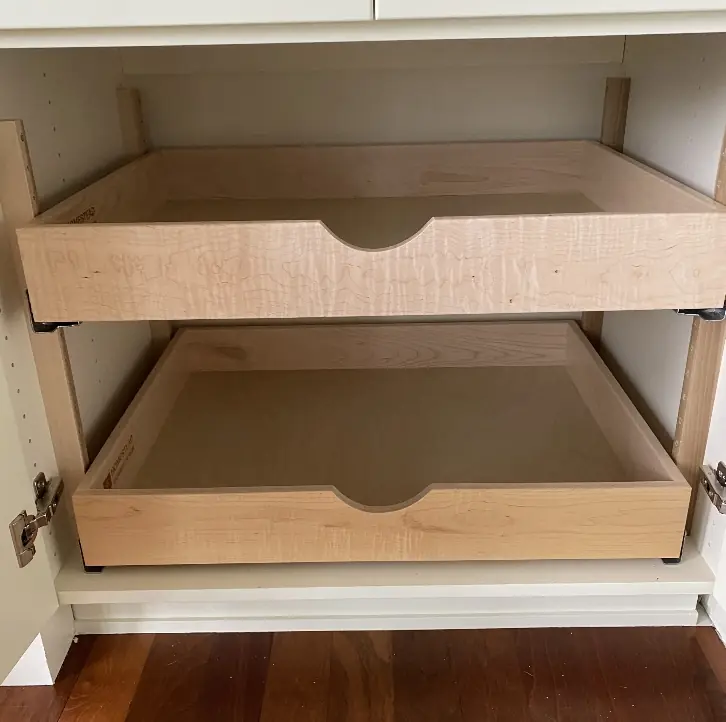
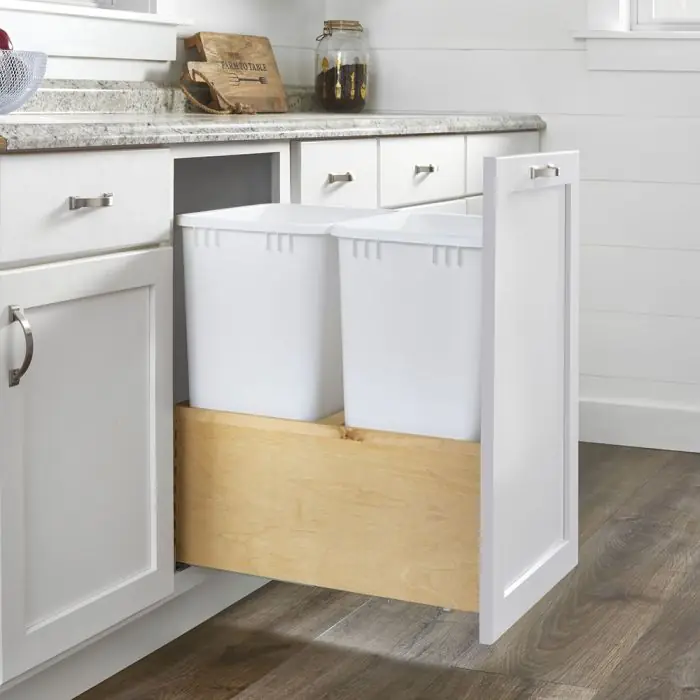
While cabinet doors are off for refinishing, it's the ideal time to add pull-out drawers to existing lower cabinets. No more digging to the back of deep base cabinets — roll-out organizers make every inch of storage accessible and usable.
Replace the under-sink or base cabinet with a purpose-built trash and recycling pull-out. Hides waste bins inside cabinetry, frees up floor space, and makes sorting recycling effortless — a practical upgrade most homeowners wish they'd done sooner.
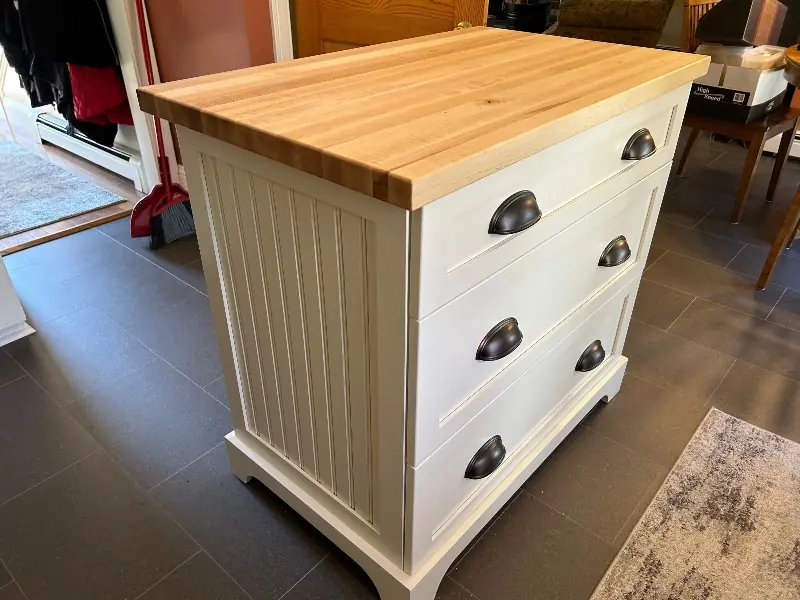
If your kitchen has the floor space, adding a custom island while we're already on-site is a high-value upgrade. Additional prep surface, storage drawers below, and a visual anchor for the room — stained or painted to coordinate with your renewed cabinets.
Learn about custom islands →Not sure whether painting, refacing, or full replacement is right for your kitchen? Here's how cabinet refinishing stacks up — so you can choose with confidence.
Refinishing is one of several ways to update your kitchen cabinets — and it isn't always the right one. This quick guide walks through all your options so you can choose with confidence.
With proper cleaning, honest repair work, and a quality protective topcoat system, a professionally refinished cabinet finish typically lasts 8–15 years with normal care. The longevity depends heavily on prep quality — degreasing, wear repair, and adhesion sanding — which is where DIY refinishing almost always fails.
We use durable, professional-grade stains and topcoats designed for the wear and moisture exposure kitchens experience daily. The result is a finish that preserves the natural wood grain and stands up to years of use.
Yes — when you love your wood grain and the finish is worn or dated, professional cabinet refinishing is one of the highest-return kitchen upgrades available. Compared to full cabinet replacement, refinishing delivers dramatic visual results at a fraction of the cost.
It's a cost-effective kitchen upgrade that increases home value and modernizes your kitchen without the disruption of a full remodel. Most homeowners in Western Massachusetts see it as one of the best decisions they made for their kitchen.
Yes — within limits. Refinishing can renew your existing tone or take it darker: honey oak to espresso, golden maple to walnut, faded cherry back to rich cherry. Going darker works beautifully because the new stain builds on the wood's existing color.
Going lighter than your current color isn't possible with refinishing — stain can't lighten wood. For a lighter wood look, cabinet refacing with new doors and veneers is the right path; for a solid color like white or sage, cabinet painting. We'll tell you honestly which fits at the consultation.
Cabinet refinishing in Massachusetts is quoted per project — the price depends on wood species, cabinet condition, finish choice, and the number of doors and drawer fronts. Most homeowners in the Springfield, Worcester, and Northampton areas get a ballpark range on the first call from a few photos.
Heavily worn or water-damaged finishes, stain color changes, and larger kitchens with more surface area add stripping and prep time. We provide written quotes with no hidden fees after an in-home assessment.
No. The kitchen will be completely out of service for the 5–8 day project. Doors and drawer fronts are removed for finishing, the work area contains dust and finishing materials, and fumes from stains and topcoats make the space unsuitable for food preparation.
We recommend setting up a temporary kitchen elsewhere in your home. 5–8 days is very manageable compared to 6–12+ weeks for full cabinet replacement or a complete kitchen remodel.
Doors and drawer fronts are removed and finished in a controlled environment — off-site or in a separate workspace — for the best quality result. Cabinet boxes and face frames are carefully masked and finished in place. This approach delivers an even, factory-quality result on every surface.
This is the professional cabinet refinishing process used by experienced craftsmen — not a quick wipe-on method that leaves lap marks, blotches, and inconsistent sheen.
Refinishing renews stained wood — the grain stays visible and the color stays in the same family or goes darker. Painting covers the wood with a solid color in any shade you like, from white to navy to sage green.
The honest rule of thumb: if you love the natural wood look, refinish. If you want a whole new color or a lighter kitchen, paint. We offer both, so the recommendation you get is based on your kitchen — not on what we happen to sell.
Yes. Cabinet refinishing is quoted per project and typically comes in well below the cost of cabinet refacing because you're keeping your existing doors — not manufacturing new ones. Refinishing is the right choice when your doors are solid wood and the finish is the only problem.
If you also want to update your door style — moving from raised-panel oak to flat shaker, for example — refacing delivers more complete transformation for the additional cost.
No — refinishing only works on real wood: solid hardwood doors or quality wood veneer. Laminate, thermofoil, and MDF have no wood grain to renew, so there's nothing for stain to work with.
That doesn't mean you're out of options. Many laminate and MDF cabinets can be professionally painted, and refacing replaces the doors entirely with new wood or painted profiles. We'll identify your cabinet material during the in-home quote and recommend the right path.
Wipe cabinet surfaces with a soft, damp cloth — avoid abrasive scrubbers or harsh chemical cleaners, which can dull the finish over time. Clean up grease and food immediately, especially around handles and near the stove. Allow proper curing time (usually 2–4 weeks) before scrubbing or deep cleaning.
With proper care, a professionally refinished cabinet surface should maintain its appearance for 8–15 years. We provide care instructions with every completed project.
"Happy to talk through your specific kitchen on a quick call — no obligation, no high-pressure sales. Just a straightforward conversation about your options."
Request a Free Quote →Key differences explained so you choose the right cabinet surface treatment for your wood type and goals.
Trending cabinet colors and timeless picks — white, navy, sage green, and two-tone combinations to inspire your project.
Painted cabinets done with 2K polyurethane last 10–20 years — the same finish quality as a brand-new kitchen. Here's what affects lifespan and what causes early failure.
How refinishing renews orange or dull oak — the process, sheen, durability, the same-tone-or-darker rule, and when to reface instead.
Not sure which color is right? Preview cabinet colors and finishes on a kitchen in seconds — compare crisp whites, deep navies, sage greens, and two-tone combinations before your project ever starts.
Open the Kitchen Visualizer →Get a free quote — most homeowners in Massachusetts get a ballpark number on the first call. Just bring a few photos of your kitchen and we'll take it from there. No pressure, no obligation.