The short answer
Cabinet refinishing is one of the most affordable ways to make a tired kitchen look cared-for again — noticeably less than refacing and far less than new cabinets. Rather than throw a single number at you, it's more useful to understand what you're actually paying for, because the range is wide. A simple color-match and touch-up on a modest kitchen sits at the affordable end. A large, detailed kitchen — or one where you want to shift the color darker — costs more.
The honest way to think about it: refinishing price tracks three things — the size of your kitchen, how detailed the cabinetry is, and whether you're keeping your color or changing it. Get those three straight and the number stops feeling like a mystery. We'll break each one down below, and at the end you can request a free quote for an exact figure on your kitchen.
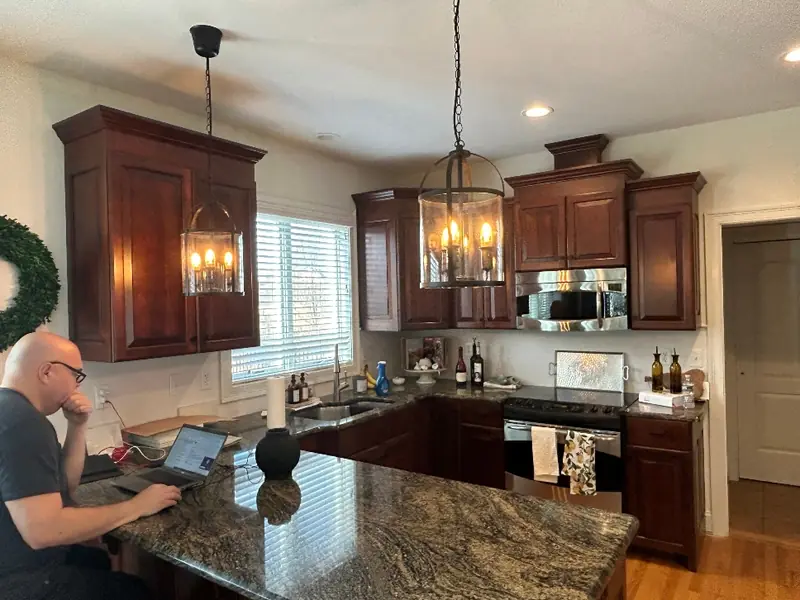
A typical starting point — solid wood cabinets that are structurally fine but worn, faded, and tired around the edges. This is exactly the kind of kitchen refinishing was made for.
What "cabinet refinishing" actually means
Refinishing restores the wood you already have. It is not stripping everything to bare wood and starting over, and it is not covering the wood in a solid paint color. It's a restoration of the existing stained finish. When people search for restaining cabinets, this is usually what they're picturing — keeping the wood look, just fresh again.
Here's the process as I'd walk you through it on a consultation:
The big misconception: most people think refinishing is dabbing a little stain on the worn spots and calling it done. It isn't. Even a "touch-up" job means cleaning and scuffing the whole surface, blending the repaired areas to match, and recoating everything. That's why a real refinish looks seamless and a spot-fix looks blotchy.
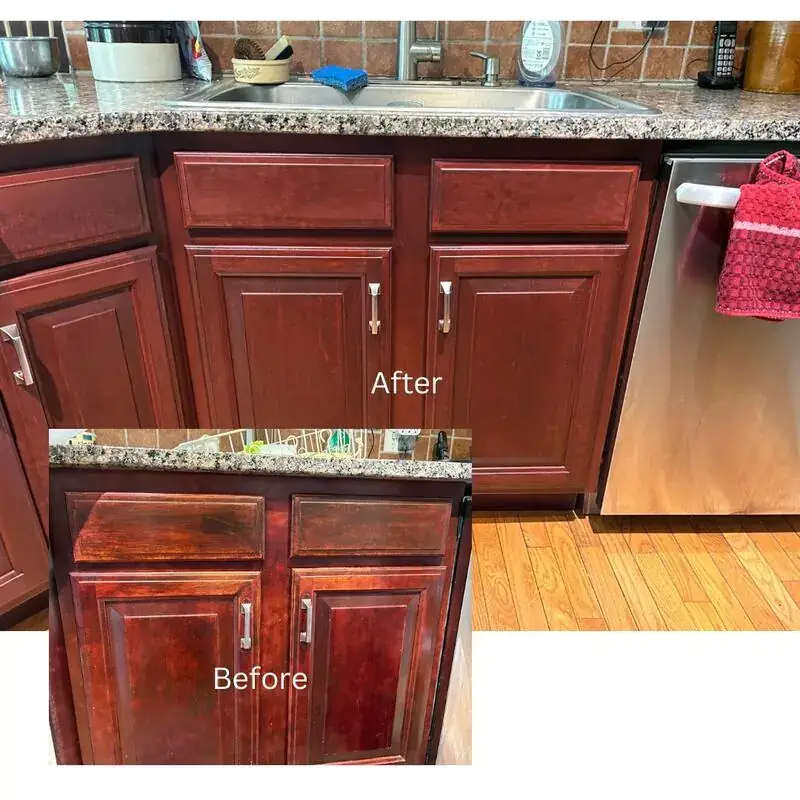
The same idea done right — cleaned, repaired, blended, and recoated. The wood grain stays; the tired, worn look is gone.
When refinishing is the right call
Refinishing shines in a specific situation: your cabinets are solid wood, structurally sound, and you actually like the color and style — they just look worn. If that's you, refinishing gives you the biggest visual return for the least money and disruption.
The most common reasons homeowners in Western Massachusetts refinish:
- General wear and tear. Years of daily use dull and thin the finish, especially on the doors and drawer fronts you touch most.
- Scratches and scuffs. Surface damage that hasn't gone through to bare, rotted wood.
- Water damage around the sink. The finish near the sink and dishwasher takes the most moisture and fails first — refinishing restores that protective layer.
- Faded or blotchy finish. Sun and age can leave the finish uneven; refinishing evens it back out.
- You like the color. If you're happy with the tone and the wood, there's no reason to pay to cover or replace it.
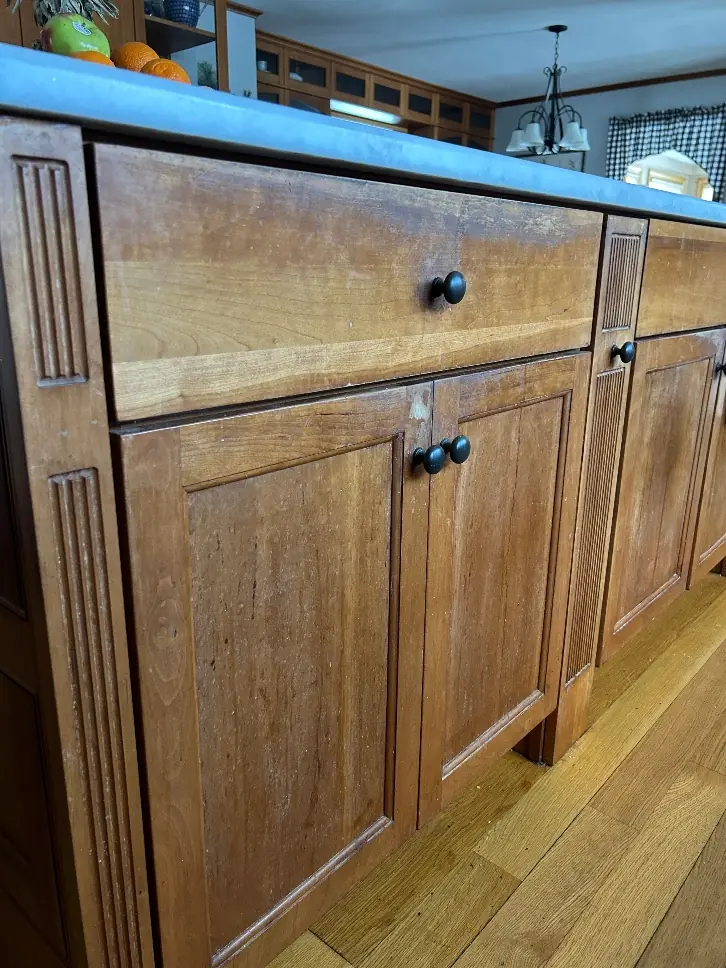
Worn, thinning finish from years of use.
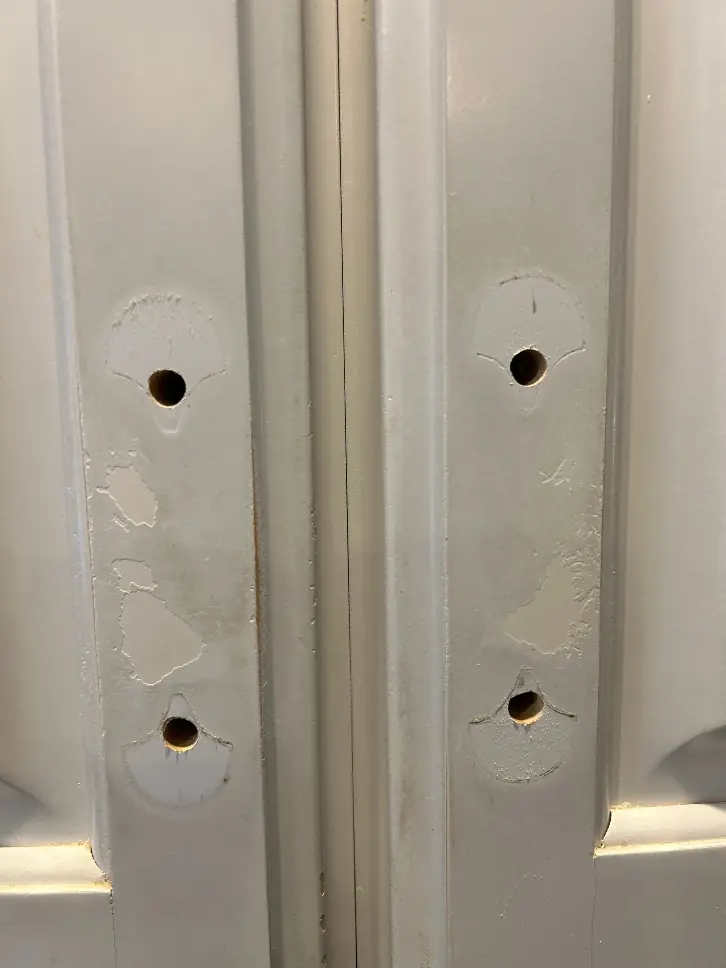
Finish breaking down around the handles — the highest-touch zone.
What refinishing won't do
I'd rather set the expectation honestly up front than have you disappointed later. Refinishing is a restoration, not a rebuild. On a worn kitchen, expect roughly an 80 to 90 percent improvement — which, on cabinets that looked tired, is a dramatic, genuinely satisfying result. But it won't make forty-year-old cabinets identical to brand-new ones, and it won't erase every imperfection.
Refinishing is not the right move when:
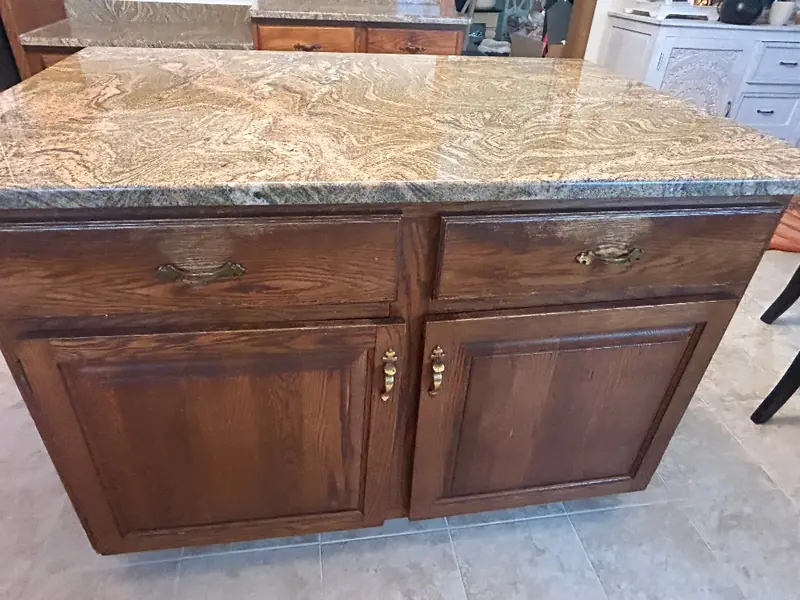
Surface water damage like this refinishes beautifully. Wood that's swollen or rotted through is a different conversation.
The products that make it last
The finish is only as durable as what goes on top of it, and this is where professional refinishing separates from a weekend project. I topcoat with Renner 2K clear coats — a two-component finish that chemically cures into a hard, water-resistant film rather than simply drying out. In a kitchen, where moisture and daily wear are constant, that hardness and water resistance is exactly what keeps the finish from softening and failing around the sink and the handles.
That's the same class of finish that goes on high-end factory cabinetry. It's why a professional cabinet refinishing job can hold up for many years, while a hardware-store polyurethane brushed on over unsanded cabinets often starts peeling within a season. In a working kitchen, a proper 2K clear coat is what gives you:
- Water resistance around the sink and dishwasher, where finishes fail first.
- Hardness at the handles, the highest-touch zone on any cabinet.
- Scratch and heat resistance that stands up to everyday cooking and cleaning.
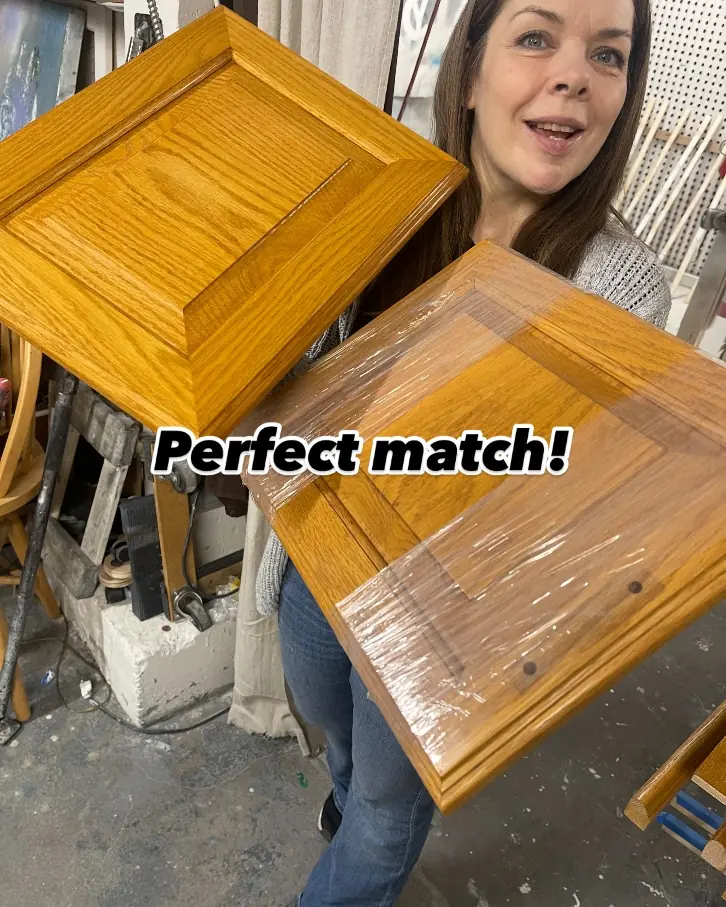
Color-matching in progress — blending the new stain to the existing wood is what makes the finished result look seamless.
What makes one refinishing job cost more than another
Since every kitchen is different, the price follows the work. These are the factors that move it up or down — in rough order of impact:
- Kitchen size. More doors, drawers, and linear footage means more surface to clean, scuff, stain, and coat. This is the biggest single driver.
- Level of detail. Raised-panel doors, glass mullions, decorative molding, and intricate profiles take far longer to prep and coat than simple flat or shaker fronts.
- Same tone vs. going darker. A straightforward color-match and touch-up is the simplest and most cost-effective job. Shifting the color darker with a toner adds steps and pushes the price up.
- Amount of repair. A little wear is quick. Extensive water damage, many gouges, or failing spots that need rebuilding add labor.
- Condition of the existing finish. A sound finish scuffs and recoats easily; a flaking or previously botched finish needs more work to get to a stable base.
Rule of thumb: the closer you stay to your existing color, and the simpler your door style, the more affordable the job. The more you change — darker color, heavy repairs, ornate doors — the more it moves toward the cost of refacing, at which point it's worth comparing the two.
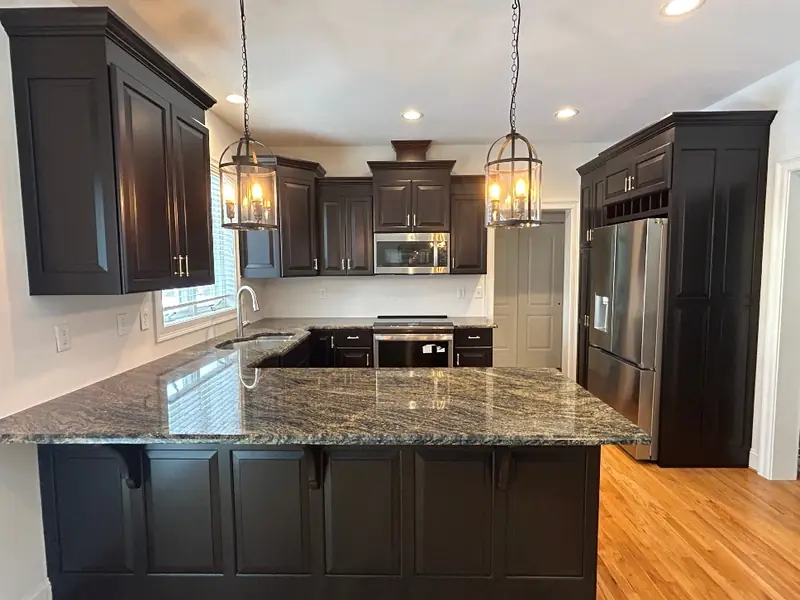
Going darker — like this espresso tone — is achievable with a toner, but it adds steps and cost compared to a same-tone refresh.
Refinishing vs. painting vs. refacing
Because these three often get compared on the same kitchen, here's how they line up on the things that actually matter. (For a deeper look at two of them, see our guide on cabinet painting vs. refinishing.)
| What matters | Refinishing | Painting | Refacing |
|---|---|---|---|
| Keeps the natural wood look | Yes | No — solid color | Yes, with new wood/veneer |
| Color direction | Same tone or darker | Any solid color | Any, including lighter |
| Handles deep damage | Surface wear only | Minor only | Yes — new surfaces |
| Result vs. brand new | ~80–90% restored | Like-new painted finish | Like-new |
| Relative cost | Most affordable | Mid | Highest of the three |
| Typical timeline | About 5–8 days | About a week | A few days |
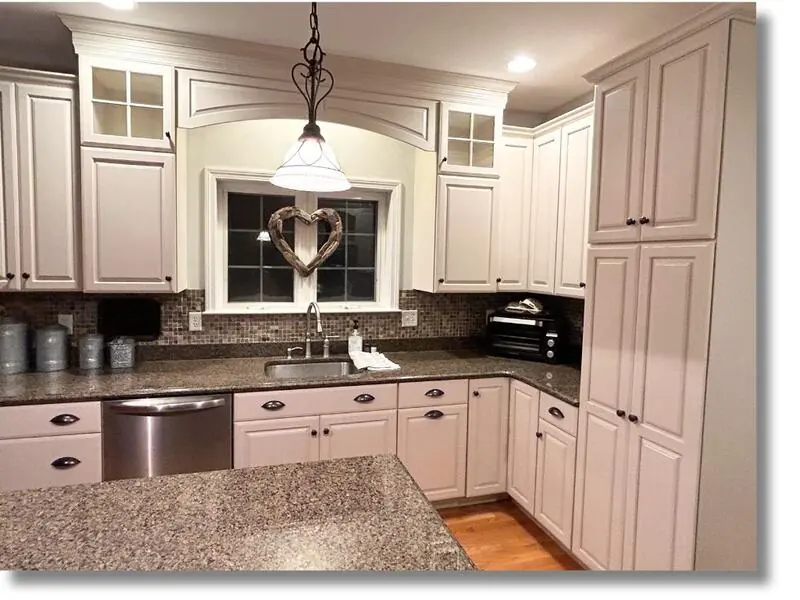
Same kitchen, different routes. Refinishing keeps the wood; painting gives a solid color; refacing rebuilds the surfaces.
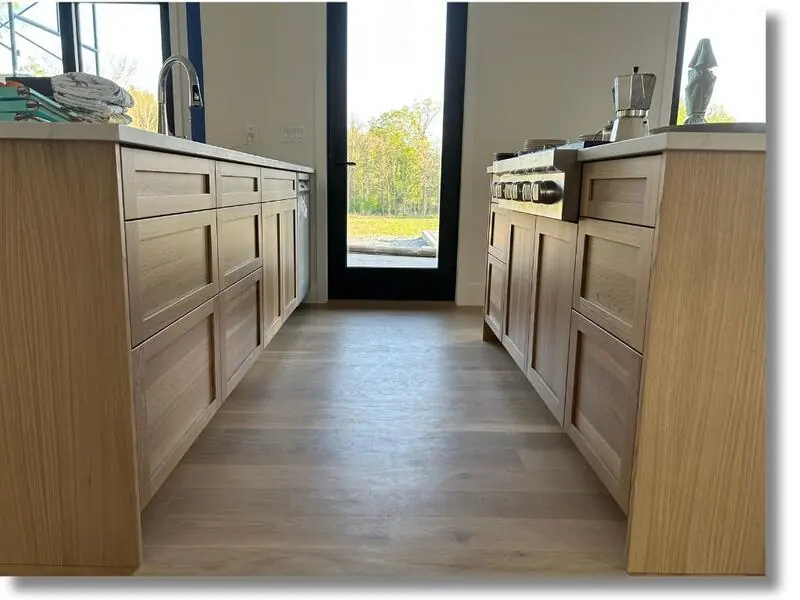
Refinishing is at its best on solid, natural hardwoods — the wood you already paid for, brought back to life.
Frequently asked questions
What's the difference between cabinet refinishing, painting, and refacing?
Refinishing keeps your existing wood and restores it — cleaning, repairing wear, re-staining to match or darken, and applying fresh clear coats. Painting covers the wood in a solid opaque color. Refacing replaces the doors, drawer fronts, and visible surfaces with all-new material. Refinishing is the route when you like the wood and the color and simply want it restored.
Can refinishing make my cabinets a lighter color?
Not really. Refinishing works with your existing stain, so we can keep the same tone or go darker with a toner, but we can't make the wood lighter than it already is. If you want a lighter look, that means refacing with new veneers and doors, or painting for a solid color.
Will refinishing make my cabinets look brand new?
Refinishing typically delivers about an 80 to 90 percent improvement, which looks excellent on cabinets that were worn or tired. It's a genuine restoration, not a rebuild, so it won't erase every flaw or make old cabinets identical to new ones. If you want a flawless, factory-smooth finish, refacing or new cabinets is the better path.
Is cabinet refinishing just touching up a few spots?
That's the most common misunderstanding. Refinishing isn't dabbing stain on the worn areas and walking away. The whole surface has to be cleaned and scuffed, damaged areas repaired, the touch-up spots blended to match, and then the entire surface recoated with a fresh clear coat. That blending step is what makes the result look uniform instead of patchy.
How long does cabinet refinishing take, and can I use my kitchen?
Most refinishing projects run about 5 to 8 days depending on kitchen size and detail. Because the stain and clear coats need proper cure time, expect limited access to the cabinets during the project, though refinishing is generally less disruptive than a full remodel.
How much does cabinet refinishing cost in Massachusetts?
It depends on the size of your kitchen, how detailed the cabinetry is, and whether you're keeping the same tone or changing the color. A straightforward color-match and touch-up is the simplest and most cost-effective; going darker with a toner adds steps and cost, and larger, more detailed kitchens run higher. We give you an exact figure with a free, no-pressure quote.
Wondering if refinishing is right for your kitchen? Send a few phone photos of your current cabinets and Raymond will give you an honest read — whether refinishing is the smart move, or whether refacing or painting would serve you better. No showroom pitch, no pressure. Request a free quote or call (413) 450-0028.