Why oak cabinets look dated — and why that's fixable
Oak was the dominant cabinet wood through the 1980s and 1990s. The strong grain pattern, warm honey tones, and raised panel doors that were everywhere then feel visually heavy by today's standards. The problem isn't the wood — it's the color and style. Oak itself is extremely durable and often structurally sound decades later.
That's the good news: you don't have to replace solid, well-built cabinet boxes just because the finish looks dated. There are several proven approaches to modernizing oak cabinets, and the right one depends on what you want to change and how much you want to spend.
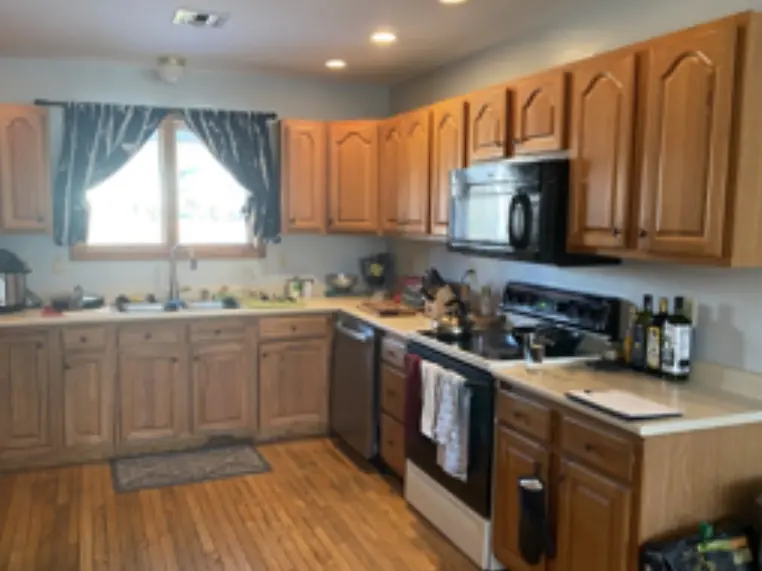
Can you restain oak cabinets?
Yes — but with one important rule: toning and restaining go darker, not lighter. Oak takes stain beautifully, so if you like the natural wood look and just want a richer, more current color, refinishing is a great path. We can move honey oak toward a deeper gray-brown, a walnut tone, or a dramatic espresso.
What you can't do with stain is make oak lighter than it already is. Stain only adds color — it can't subtract the existing honey tone. So if your goal is a lighter, brighter kitchen, restaining isn't the answer; refacing with natural or lightly stained wood, or painting, is the way to get there.
Lighting matters with dark stains. A toned espresso oak looks stunning in a kitchen with good natural or overhead light. In a darker kitchen, going that deep can make the space feel closed-in — in those cases we usually steer homeowners toward painting or refacing with a lighter color instead.
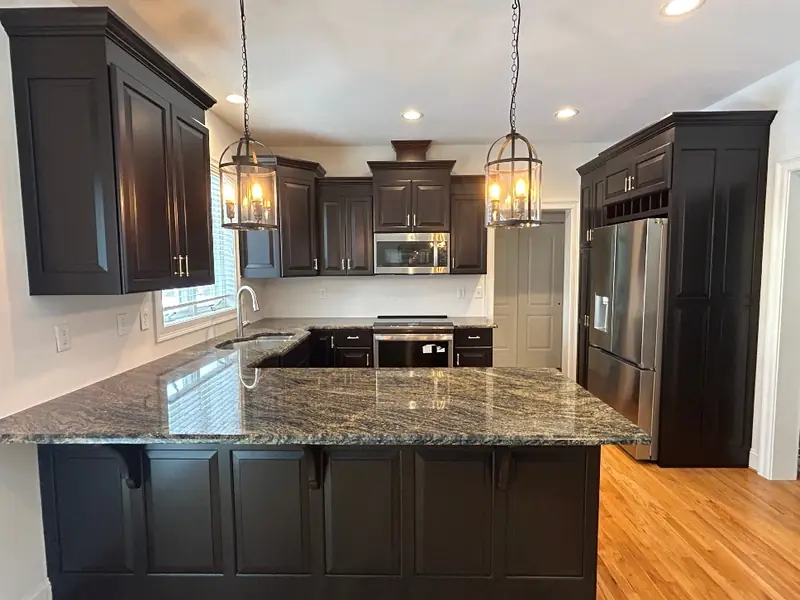
The best ways to make oak cabinets look modern
If you're wondering how to make oak — or any wood cabinets — look modern without tearing the kitchen out, here are the proven moves, roughly from least to most transformative:
- Paint them a current color (soft white, greige, sage, or a moody dark) for the biggest change per dollar.
- Glaze them to lean into the grain for a warm farmhouse look instead of fighting it.
- Tone or refinish the stain to a deeper, richer color if you want to keep real wood.
- Reface the doors and boxes to change the door style completely and erase the oak grain.
- Swap the hardware — matte black or satin brass pulls instantly modernize any of the above.
- Add under-cabinet lighting and a fresh wall color to finish the transformation.
The rest of this guide walks through each of these in detail so you can see which fits your kitchen and budget.
Option 1: Paint the cabinets
Professional cabinet painting is the most affordable way to transform oak cabinets. Here's the honest tradeoff most painters won't tell you: oak has a pronounced open grain, and that grain will show through paint. With proper prep and grain filler the surface gets much smoother, but on a bright white door the texture is still visible up close.
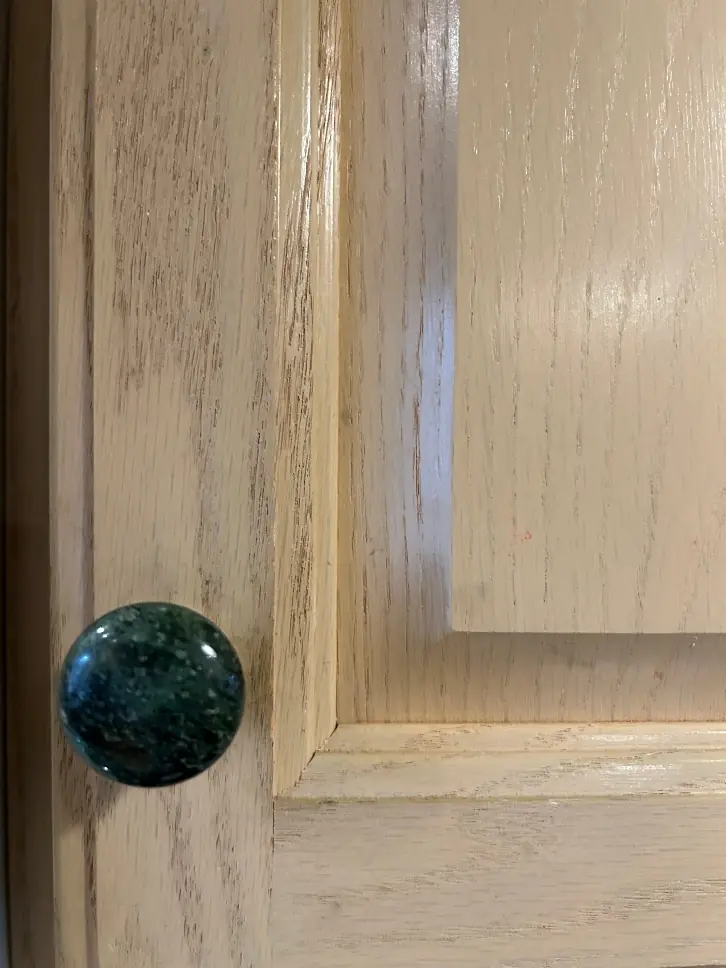
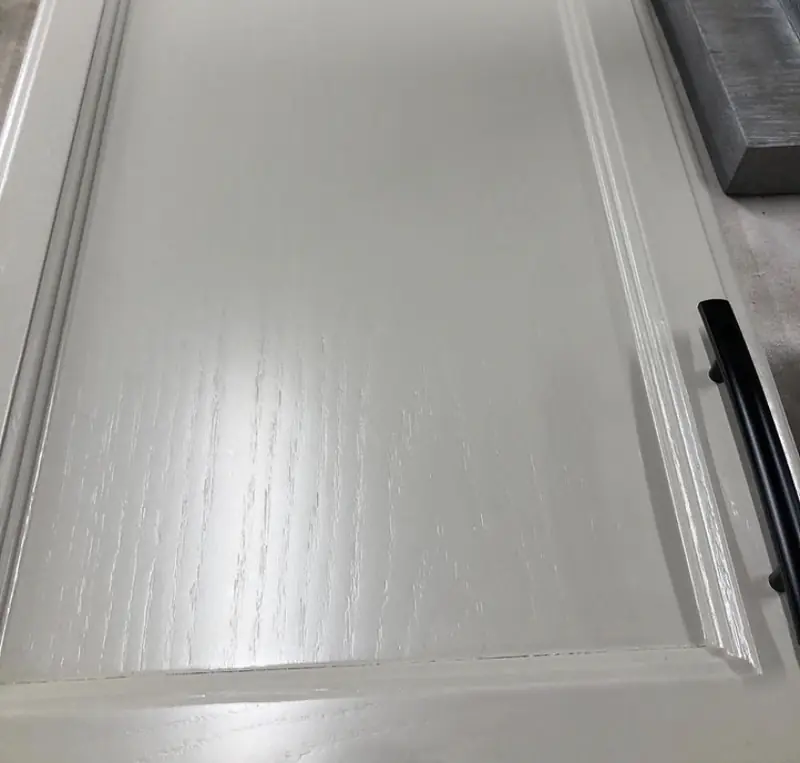
There's a smart way to work with this rather than against it: painting oak a darker color hides the grain far better than a bright white. A deep green, navy, charcoal, or greige absorbs the texture visually, so the grain reads as subtle character instead of an obvious ridge pattern.
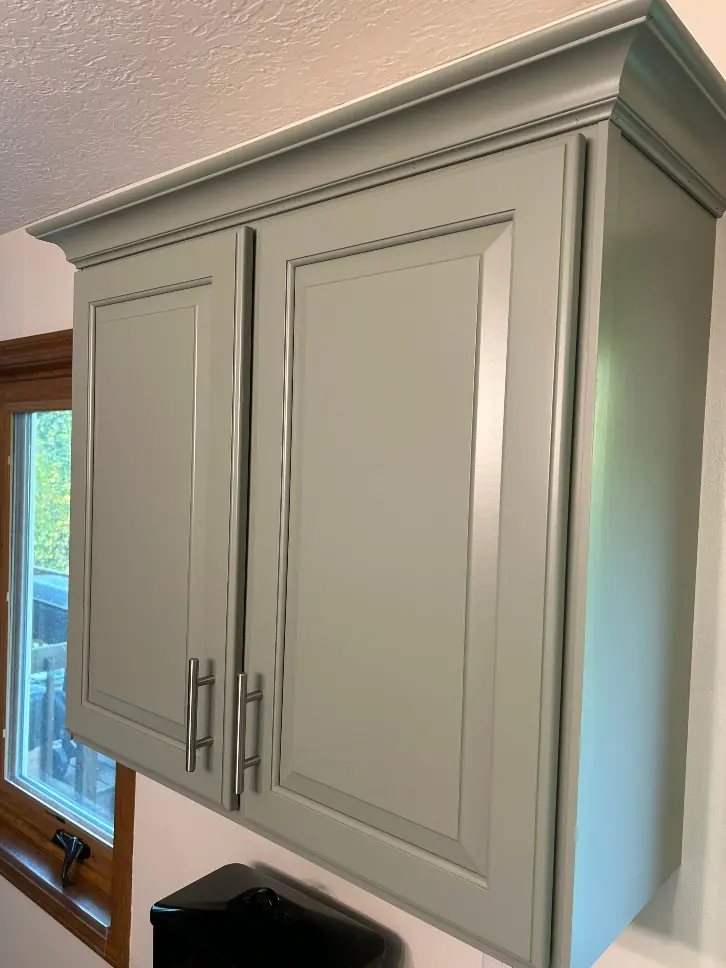
Best for: Homeowners who like their door style and just want a color change.
Timeline: Most painting projects take 5–9 days on-site.
Use the right paint. The cheapest cabinet paints aren't worth it. We spray professionally formulated 2K cabinet coatings that are water resistant and scratch resistant — they'll outlast any 1K trim or cabinet paint off a hardware-store shelf. (More on the difference in our guide to how long cabinet painting lasts.)
Option 2: Glaze them for a farmhouse look
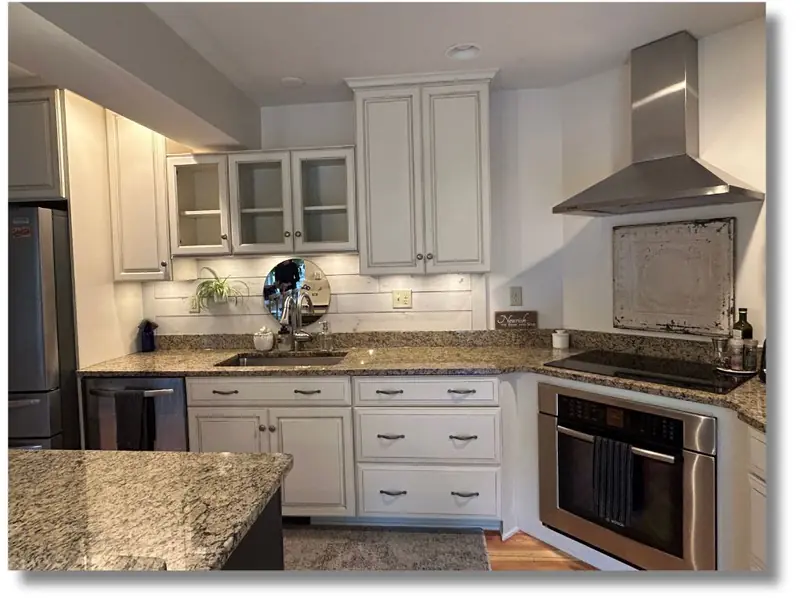
If you don't want to hide the grain — or you love a warm, lived-in farmhouse kitchen — glazing is a beautiful option for oak. Instead of covering the grain, a glaze settles into it and highlights the texture, giving the cabinets a soft, hand-finished, aged character.
Glaze is usually applied over a painted base, so you get a clean modern color and the depth of the grain working together. It's a particularly good fit for oak because oak's pronounced grain is exactly what makes glazing pop.
Option 3: Reface the cabinets — the most flexible option
Refacing replaces the doors and drawer fronts entirely and applies new veneer to the exposed cabinet box surfaces. This is the option with the most possibilities because you're not painting or staining oak at all — you're covering every bit of the oak grain with a brand-new surface.
That means you can use almost any domestic wood or color. Oak cabinets can be transformed to look like cherry, maple, rift-cut white oak, and more — and unlike stain, refacing is how you genuinely lighten a kitchen: choose a natural or lightly stained wood and the dark honey oak disappears completely.
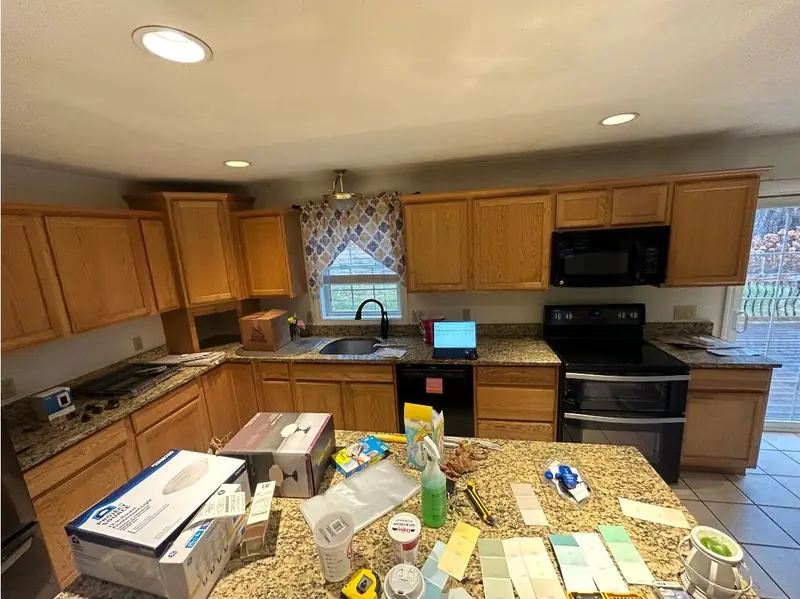
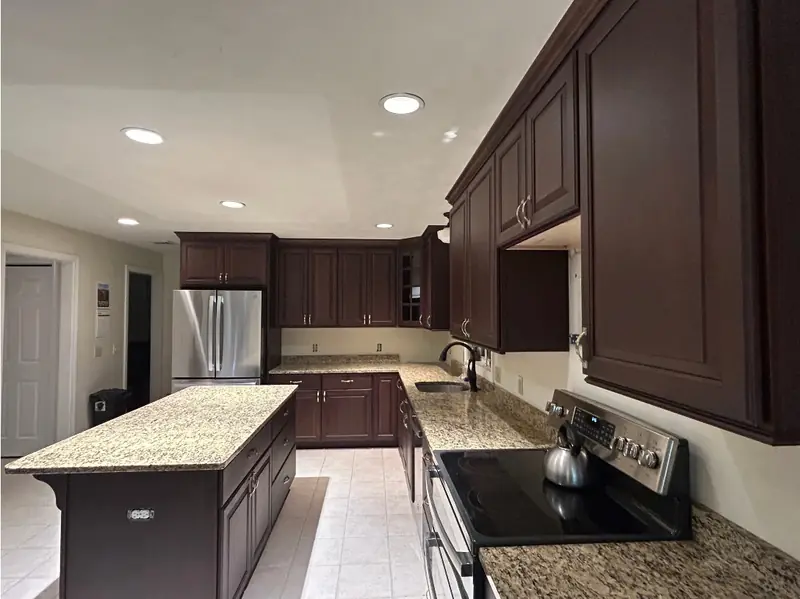
Want to go lighter and brighter instead? The same process takes oak to a crisp white shaker or a natural wood tone:
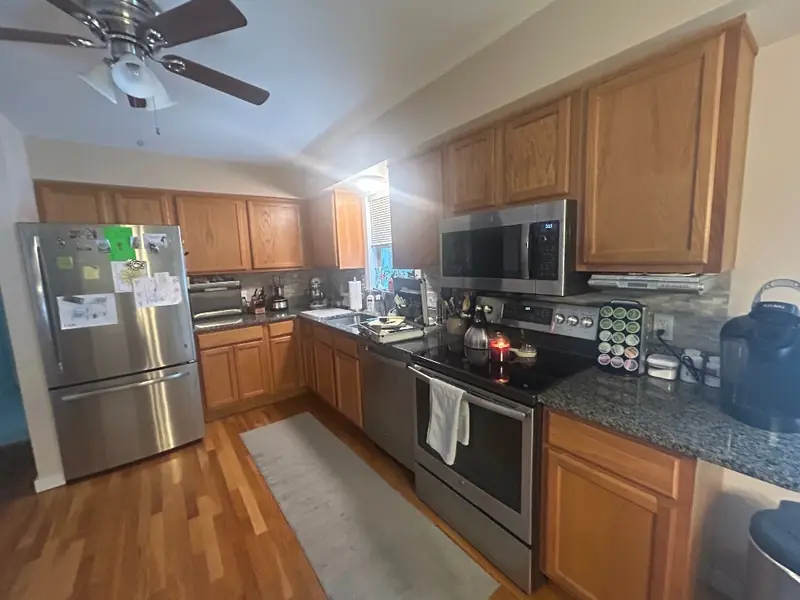
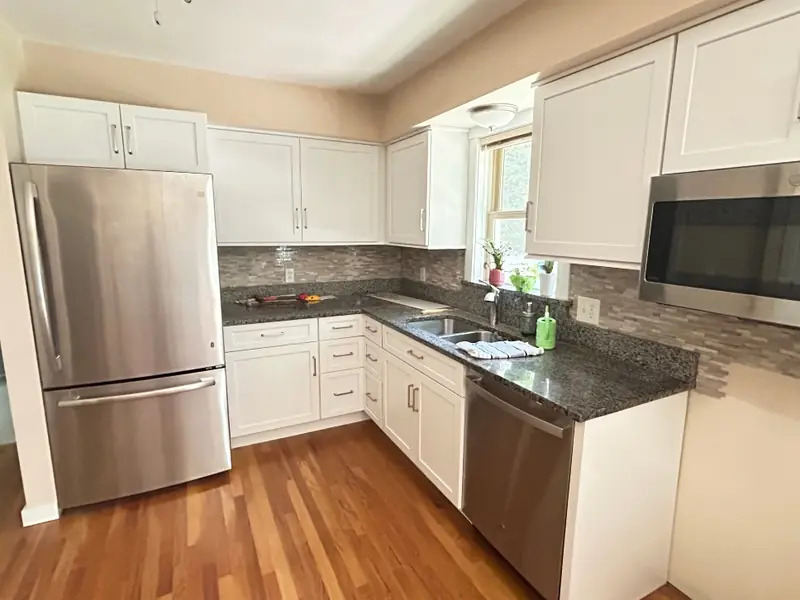
Best for: Homeowners who want a completely new look — new door style, lighter color, new hardware — while keeping the structurally solid existing boxes.
Timeline: 4–10 days on-site once materials arrive.
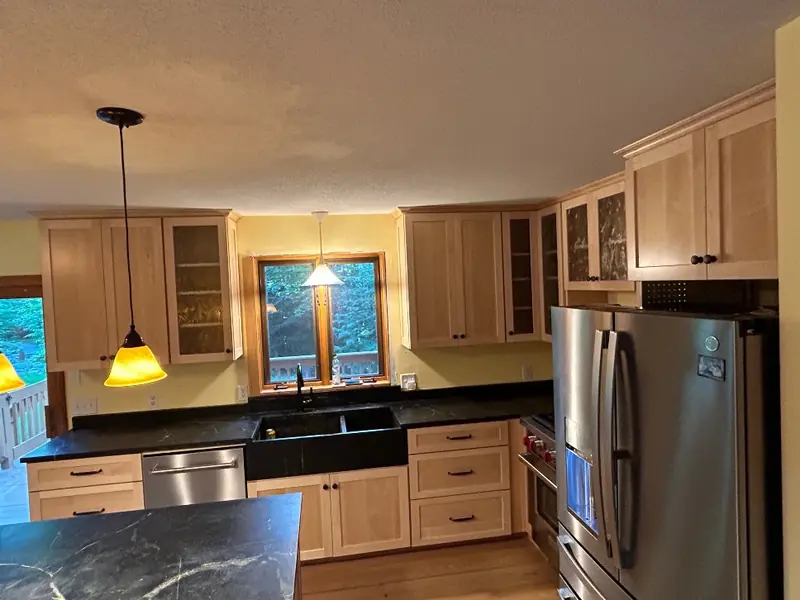
Option 4: Refinish or tone the stain
If you like the natural wood look but want to refresh or deepen the color, refinishing renews the finish and applies a new stain or toner and protective clear coats. This preserves the oak grain as a feature rather than hiding it.
Best for: Homeowners who appreciate the wood character and want a richer, more updated stain — honey oak to a deeper walnut, gray-brown, or espresso tone.
Remember the direction rule: toning goes darker, not lighter, and a dark tone needs a well-lit kitchen to look its best. If your kitchen is on the darker side, paint or a light refacing will serve you better.
Comparison at a glance
| Option | Changes door style? | Can go lighter? | Hides grain? |
|---|---|---|---|
| Painting | No | Yes | Mostly |
| Glazing | No | No | No — highlights it |
| Refacing | Yes | Yes | Completely |
| Refinishing | No | Darker only | No — preserves it |
Updating the whole kitchen around oak cabinets
Updating the cabinets is the biggest lever, but the surfaces around them carry a dated oak kitchen the rest of the way. If you're refreshing the whole room, a few coordinated choices make the new cabinets look intentional rather than orphaned:
- Countertops: A light quartz or a soft white-and-gray stone instantly modernizes the room and pairs cleanly with painted, refaced, or natural-wood cabinets.
- Backsplash: A simple white or muted subway or zellige tile keeps the focus on the cabinets and reads current.
- Wall color: Warm whites and soft greiges flatter wood tones; if you kept or deepened a wood stain, avoid competing warm-orange wall colors.
- Flooring: If you're replacing floors, a mid-tone or cooler wood or LVP de-emphasizes any remaining warmth from oak elsewhere in the room.
- Lighting: Under-cabinet LEDs and updated fixtures do as much for a "modern" feeling as anything on this list.
What about the hardware?
Don't underestimate how much hardware affects the final look. Swapping out the brass or almond pulls on oak cabinets for matte black, brushed nickel, or satin brass hardware makes a significant visual difference — and it's inexpensive relative to the rest of the project. New hardware is typically included or available as an add-on with any cabinet update project.
Want to see what your oak cabinets could look like? Raymond can walk you through your options in a free 15-minute call. Schedule a call →
What Homestead recommends for oak cabinets in Western MA
If your oak cabinets are in good structural shape — solid boxes, drawers that work, no major damage — the most cost-effective path to a modern kitchen is usually painting or refacing. Full replacement of structurally sound oak cabinets is rarely necessary and significantly more expensive.
The right answer depends on your budget, how much you want to change the door style, and whether you want to go lighter, deeper, or keep the wood look. A free phone call with Raymond takes about 15–20 minutes and will give you a clear picture of what makes sense for your specific kitchen.
Frequently asked questions
Can you restain oak cabinets?
Yes. Oak takes stain well, but toning and restaining almost always move the color darker, not lighter — a richer honey, a gray-brown, or an espresso tone. Going lighter than the existing oak isn't realistic with stain; for a lighter look you'd reface with natural or lightly stained wood, or paint.
Can oak cabinets be made to look modern without replacing them?
Almost always. If the boxes are solid, you can paint them, glaze them for a farmhouse look, refinish or tone the stain, or reface the doors and boxes entirely. New hardware on top of any of those makes the biggest visual change for the money. Full replacement of structurally sound oak is rarely necessary.
Does oak grain show through paint?
Yes — oak has a pronounced open grain that telegraphs through paint more than maple or birch. Professional prep with grain filler minimizes it, and a darker color hides remaining grain far better than a bright white. If a perfectly smooth, grain-free surface is the goal, refacing or new doors is the surer path.
Can you make oak cabinets lighter?
Not with stain. Toning and refinishing go darker. To genuinely lighten oak cabinets you reface them with new natural or lightly stained veneer and doors, or you paint them a light color. We help homeowners pick the right path based on their kitchen's lighting.
What is the most affordable way to update oak cabinets?
Professional cabinet painting is usually the most affordable transformation, with glazing a close add-on to a paint job. Refacing costs more but changes the door style and covers the grain completely. Refinishing keeps the real-wood look while refreshing the color. We'll give you an exact figure after a quick look at your kitchen.
How long does a painted or refinished oak kitchen last?
With a true 2K (two-component) cabinet finish, far longer than any 1K paint sold at a hardware store. Our finishes are made for kitchen cabinets — water resistant and scratch resistant — so a properly prepped oak kitchen holds up for years of daily use.