The short answer
One of the most common questions I get on a kitchen consultation is what to do about the gap up top — and whether small cabinets above kitchen cabinets are worth adding, or whether that space is better closed off entirely. The honest answer is that it depends on two things: how much usable height you have up there, and whether you actually need the storage.
So is there enough room to build a second cabinet up there? My rule of thumb is that you want at least 12 inches of gap. Crown molding will cover a few inches along the top, so a 12-inch gap leaves only about an 8 to 10-inch cabinet opening — that's the practical minimum for something you can actually use. If you have less than that, or you're on the fence, consider an open cabinet without doors — more like a shadow box for decor — with crown molding above it. You get the finished, built-in look without paying for storage that's too shallow to be worth it.
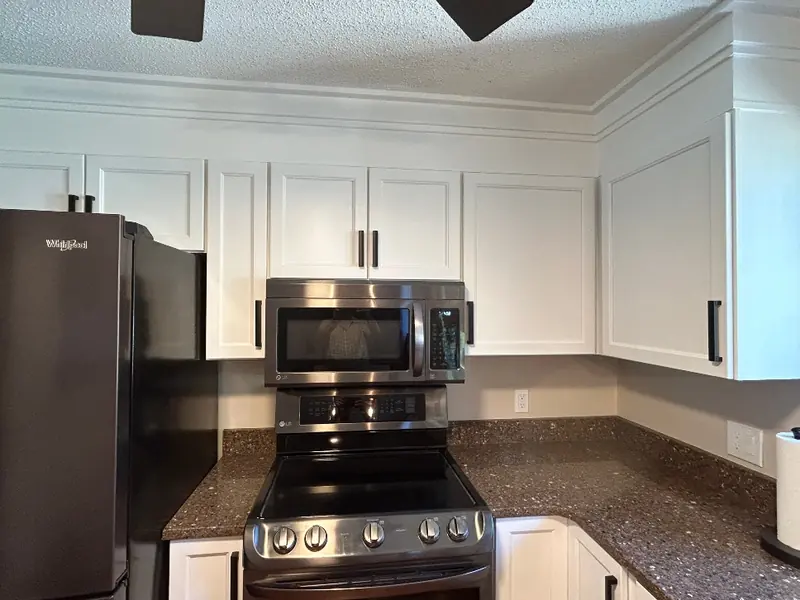
Cabinets carried all the way to the ceiling. It reads as intentional and built-in — and reclaims a whole row of storage that would otherwise sit empty.
Your four options for the space above the cabinets
Whenever a homeowner points up at that gap, I walk them through the same four choices. They run from the simplest and least expensive to the most involved — and the right one comes down to your budget and whether you need the storage.
Option 1: Close off the soffit and add crown molding
This is the simplest and most cost-effective option, and for a lot of kitchens it's the right one. If you don't need more storage, there's no reason to spend on cabinets you won't use. Instead, the open gap is framed and closed in so the cabinets appear to run right up to the ceiling, and crown molding finishes the top edge cleanly.
The result looks deliberate and built-in, and — just as importantly — it gets rid of the dust trap. An open gap above your cabinets collects grease and dust for years and is miserable to clean. Closing it in solves that for good.
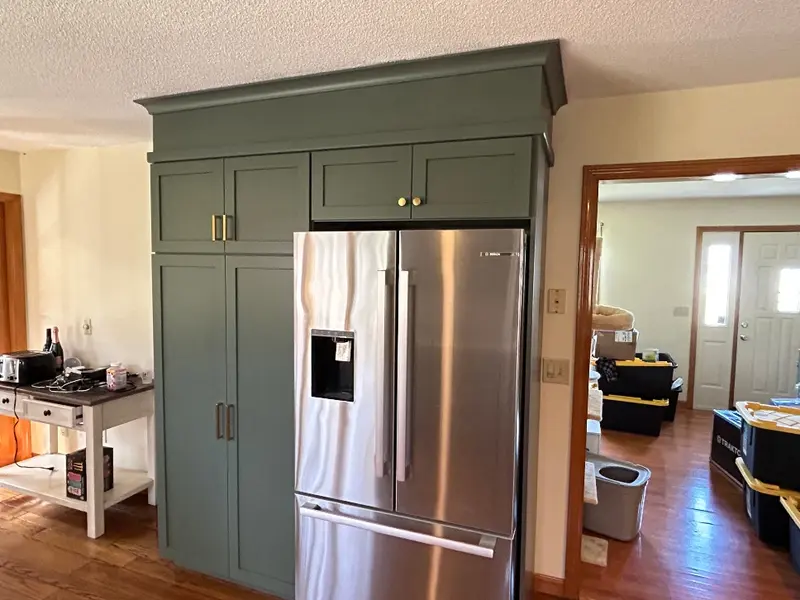
The gap framed and closed in, ready for trim
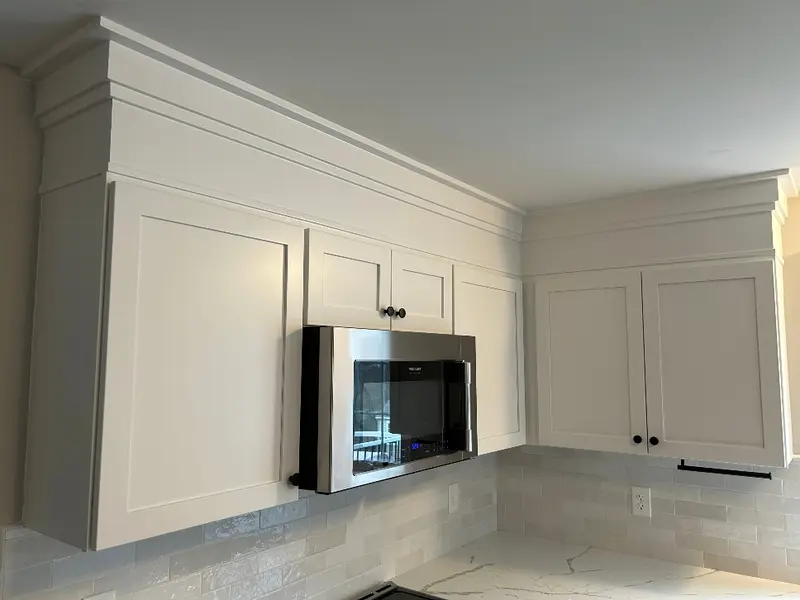
Finished with crown molding — clean line to the ceiling
Crown molding does a surprising amount of work here:
- It bridges the gap between the cabinet top and the ceiling so the line reads as intentional.
- It hides imperfections — older ceilings are rarely perfectly level, and the molding absorbs that variation.
- It elevates the whole room, giving stock or dated cabinets a custom, furniture-grade feel for a relatively small investment.
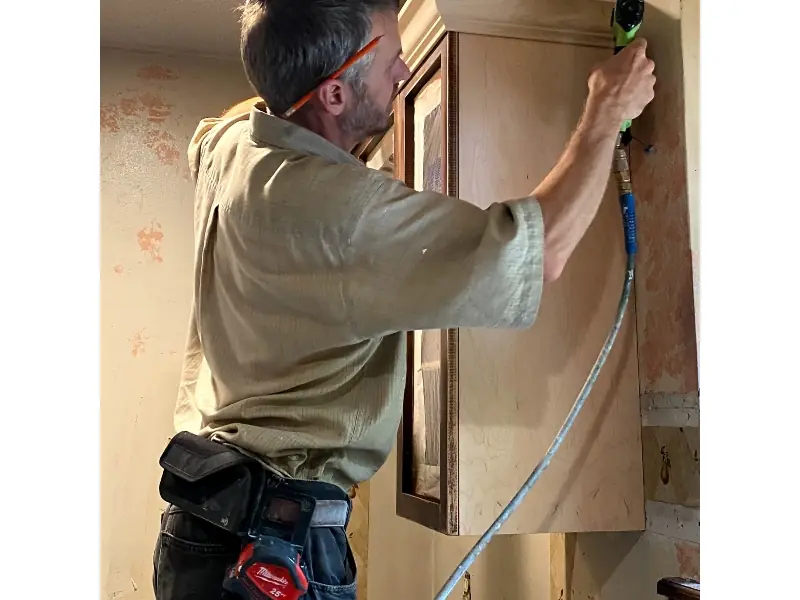
Crown molding being added across the top of a run of uppers. It's the detail that makes closed-off cabinets read as built-in rather than boxed-in.
Option 2: Add decorative panels above the cabinets
A step up from a plain closed soffit is to dress that area with decorative panels — applied trim, a furniture-style frame, or glass-front display boxes that give the eye something to land on without committing to full storage cabinets. It costs a little more than simply closing the gap, but it adds character, especially in a kitchen where the uppers are a focal point.
This is a nice middle path: more visual interest than a flat soffit, less cost than building functional cabinets you may not need. Glass-front display boxes up top are a popular version of this — they read as cabinetry but are really there for looks and a few decorative pieces.
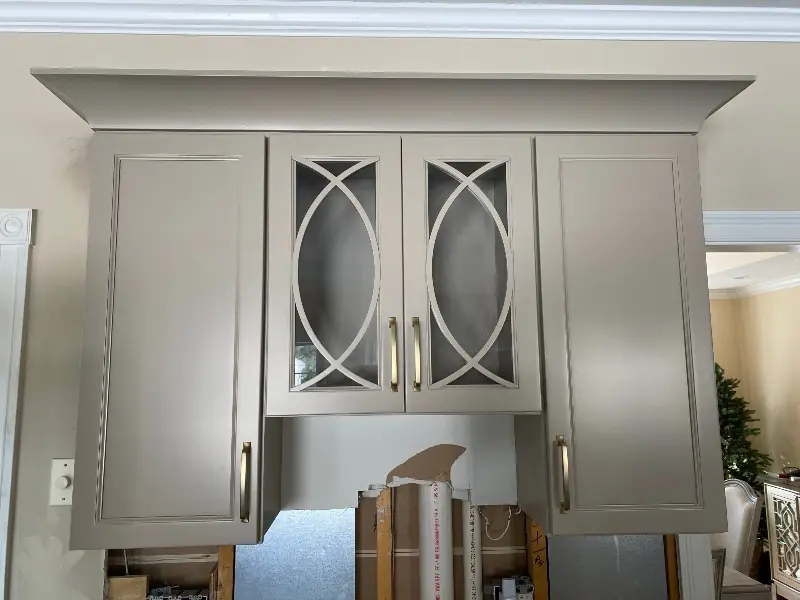
Glass-front display cabinets are a popular way to fill the space above the uppers with something decorative rather than purely functional.
Option 3: Add small stacked cabinets for real storage
If you do need the storage and the gap is tall enough, small cabinets can be built and installed directly on top of your existing uppers. These stacked cabinets are custom built to the exact height, depth, and color needed to fill the space to the ceiling, so they look like they were always part of the kitchen rather than an afterthought.
This is the classic "second row" — best reserved for the things you reach for only once or twice a year, since you'll want a step stool to get to them. Good candidates for up top include:
- Holiday and seasonal serving pieces
- Large platters and punch bowls
- Small appliances you rarely use
- Overflow glassware and stemware
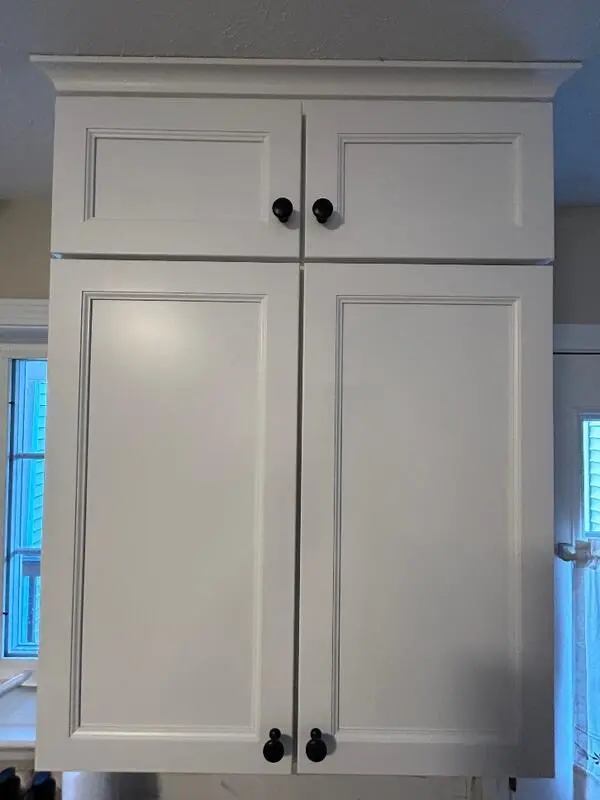
Small stacked cabinets built and added above the existing uppers — custom sized to fill the gap and matched to the original finish.
A practical note on height: as noted up top, aim for at least 12 inches of clear gap. Crown molding eats a few inches along the top, so 12 inches leaves roughly an 8 to 10-inch cabinet opening — the practical minimum for usable storage. Less than that and you're better off with an open shadow-box cabinet for decor, or simply closing the gap off.
Option 4: Replace the uppers with taller cabinets to the ceiling
Sometimes the cleanest answer isn't to add onto the existing cabinets at all — it's to replace the uppers with taller ones that run to the ceiling in a single piece. This is especially worth considering when the current cabinets aren't in the best shape to begin with. Rather than stacking new cabinets on tired old ones, you get a fresh, seamless run from countertop to ceiling.
Here's the part most people don't realize: upper cabinets are the easiest cabinets in the kitchen to replace. They come off the wall without disturbing your countertops, sink, backsplash, or lower cabinets — all of which can stay exactly where they are. That makes a full upper replacement far less disruptive (and less expensive) than people assume.
There's also a door-style consideration when you build taller. A cabinet up to about 42 inches high can be built with a single full-height door, which gives you the cleanest, most seamless look. Beyond 42 inches, it looks best to split the door — one standard-height door with a smaller door above it. That's the same finished look as adding a small stacked cabinet on top, just built as one unit from the start, and it keeps the proportions of the door looking right rather than stretched.
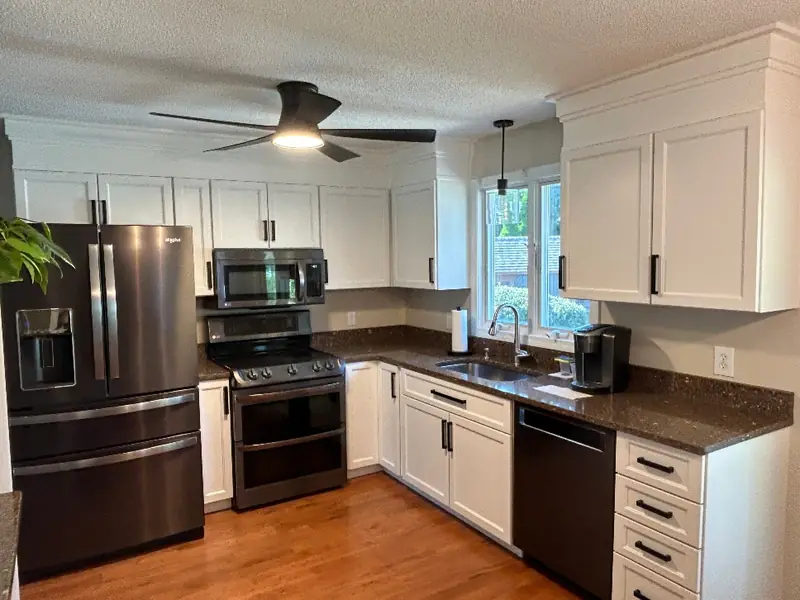
Taller uppers carried to the ceiling in one clean run. When the existing cabinets are dated or worn, replacing the uppers is often simpler than stacking onto them.
If your lower cabinets and layout are fine and you mostly want the upper section to look taller and newer, this can also pair naturally with cabinet refacing so the whole kitchen reads as one consistent finish.
When adding cabinets above isn't worth it
I'll always tell you straight when the storage option doesn't make sense. The most common case: the space is simply too small. If the gap above your cabinets is only a few inches, you can't build anything genuinely useful up there. Forcing a tiny cabinet into that space gets you a hard-to-reach box that holds almost nothing — and you've paid custom-cabinet money for it.
In that situation, close it off. You'll get a better-looking kitchen and you'll eliminate the dust trap, all for less than the cost of cabinets you wouldn't really use.
Why custom-built makes the difference here
The reason this space is tricky with off-the-shelf cabinets is that the gap is rarely a standard size. Stock cabinets come in fixed heights, and the leftover space above your uppers almost never matches one of them. That's where building custom changes everything.
Every cabinet I build at Homestead Cabinet Design is made to the exact size and color needed for your kitchen — so a stacked cabinet fills the gap precisely, and the finish matches your existing doors instead of being "close enough." Paired with custom cabinetry and quality soft-close hinges, the new pieces look and feel like they were part of the original kitchen.
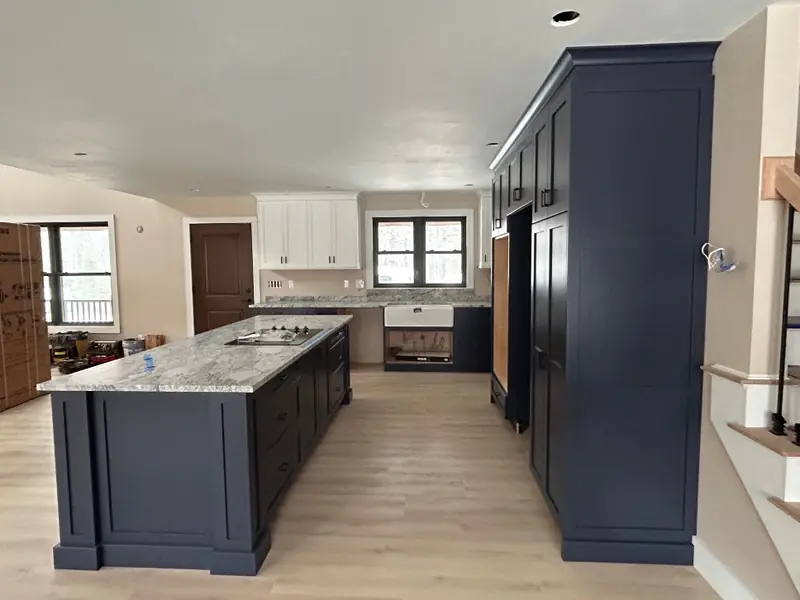
Custom uppers sized to the ceiling line for a built-in look
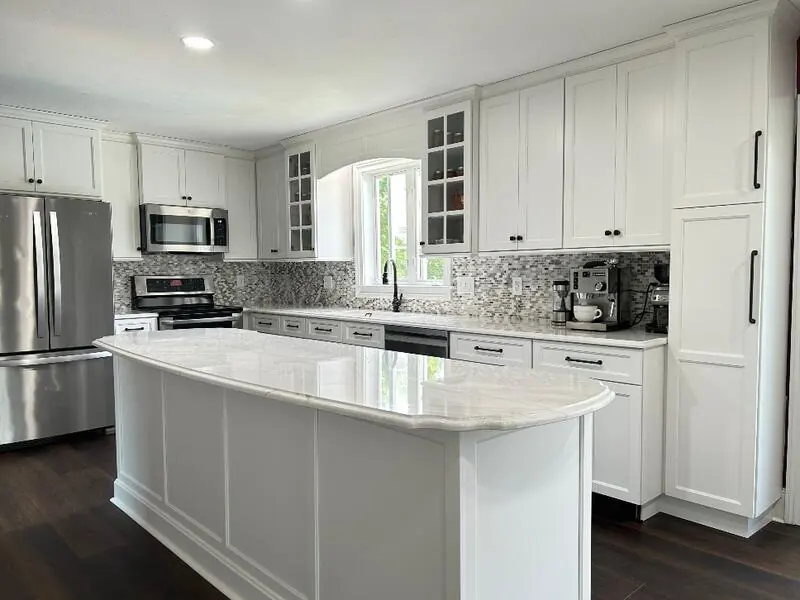
Cabinets built to the exact height and finish of the kitchen
If you're rethinking storage more broadly while you're at it, our guide to storage upgrades covers the interior fittings — pull-outs, dividers, and organizers — that make every cabinet, top row included, work harder.
What it costs
Because the four options are so different in scope, so is the price. The general order, lowest to highest, is: closing off the soffit with crown molding is the most affordable; decorative panels cost a bit more; adding new cabinets with real storage — whether stacked above the existing uppers or as full replacement cabinets to the ceiling — is the highest, since those cabinets are custom built to your space.
A handful of things move the number up or down within each option:
- The length of your upper run — more linear feet means more material and labor.
- Ceiling height and the size of the gap — taller gaps mean taller (and pricier) cabinets.
- Finish and door style — matching an existing painted or stained finish adds steps.
- Condition of the existing cabinets — worn uppers often make full replacement the smarter spend.
Every kitchen is quoted individually after I see the actual space — contact us for a free estimate.
Frequently asked questions
Should I add a second row of cabinets above my kitchen cabinets?
It depends on the size of the gap and whether you actually need the storage. If there's enough height to make a usable cabinet — and you want the extra storage — adding a second row to the ceiling is a great use of the space. If the gap is short, the cabinets up there end up too shallow and too high to be practical, and you're usually better off closing the soffit and finishing it with crown molding instead.
What do you put in the space above kitchen cabinets?
There are four common approaches. Lowest cost is to close off the soffit and add crown molding so the cabinets meet the ceiling cleanly. A step up is decorative panels that dress up the gap without adding storage. For real storage you can add small stacked cabinets above the existing ones, or replace the uppers entirely with taller cabinets that run to the ceiling. The right answer depends on the height of the gap, your budget, and whether you need the storage.
Is it better to close off the soffit or add cabinets?
If you don't need additional storage, closing off the soffit and adding crown molding is the cleaner, more cost-effective choice — and it removes the dust trap that an open gap creates. Adding cabinets only makes sense when there's enough usable height up there and you genuinely need the storage. A short, shallow upper cabinet you can barely reach often isn't worth the cost.
Can you add cabinets on top of existing cabinets?
Yes. Small stacked cabinets can be built and installed directly above your existing uppers, custom-sized to fill the gap to the ceiling. Because they're built to the exact height, depth, and color needed, they read as part of the original kitchen rather than an add-on. In some kitchens, though, it's simpler and cleaner to replace the existing uppers with taller cabinets — especially if the current cabinets aren't in great shape.
How much does it cost to add cabinets above existing cabinets?
Cost runs lowest to highest depending on the approach. Closing off the soffit with crown molding is the least expensive. Decorative panels cost a little more. Adding new cabinets with real storage — either stacked above the existing uppers or as full replacement cabinets to the ceiling — is the highest cost because the cabinets are custom built. Every project is quoted individually based on the size of your kitchen and the option you choose.
Do cabinets that go to the ceiling have to match the existing ones?
They should match if you want a seamless look. Because our cabinets are custom built to the exact size and color needed, new uppers or stacked cabinets can be matched to your existing kitchen. If matching an older or discontinued finish isn't possible, replacing the full run of uppers — or refacing — keeps everything consistent. Upper cabinets are the easiest part of a kitchen to replace because the countertops, sink, and lower cabinets can all stay in place.
Not sure which option fits your kitchen? Send a few phone photos of your cabinets and that gap up top, and Raymond will give you an honest read on whether it's worth adding storage or better closed off. No showroom pitch, no pressure. Request a free consultation or call (413) 450-0028.