What refacing actually is (and what it isn't)
Before we walk through the days, it helps to be clear on what refacing means. Refacing keeps the cabinet boxes you already have and renews every surface you see and touch. The doors and drawer fronts are replaced with new custom-built ones, and the exposed parts of the boxes — the ends, the face frames around the doors, the moldings and baseboards — are covered in a fresh, permanent surface. Think of it like putting new siding on a house: you don't tear the house down because the exterior looks dated, and you don't need to rip out sound cabinets just because the surfaces are worn.
The result is a kitchen that looks brand new for a fraction of the disruption of a full kitchen remodel. It's also different from painting — if you're weighing those two, our guide on painting vs. refinishing is a good companion read. This post is about the experience: what a refacing week actually looks like in your home.
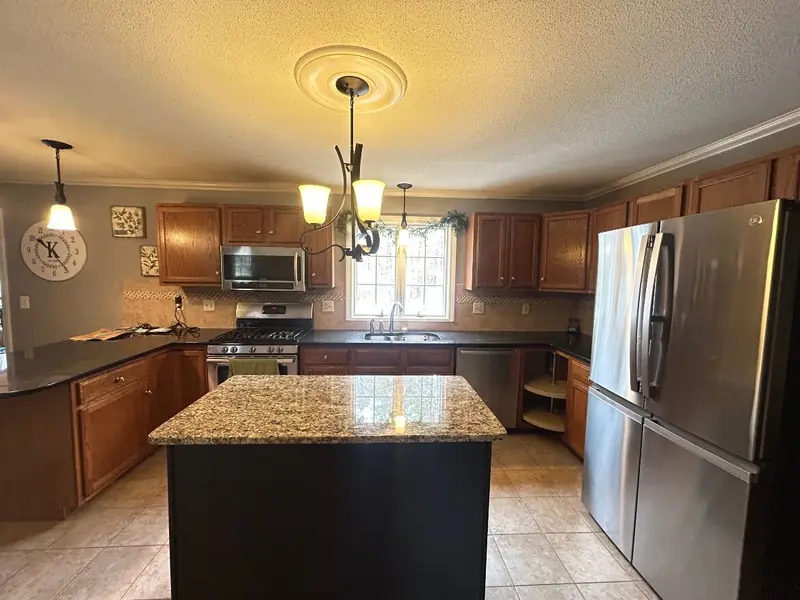
Before — sound but dated oak boxes in Ludlow, MA.
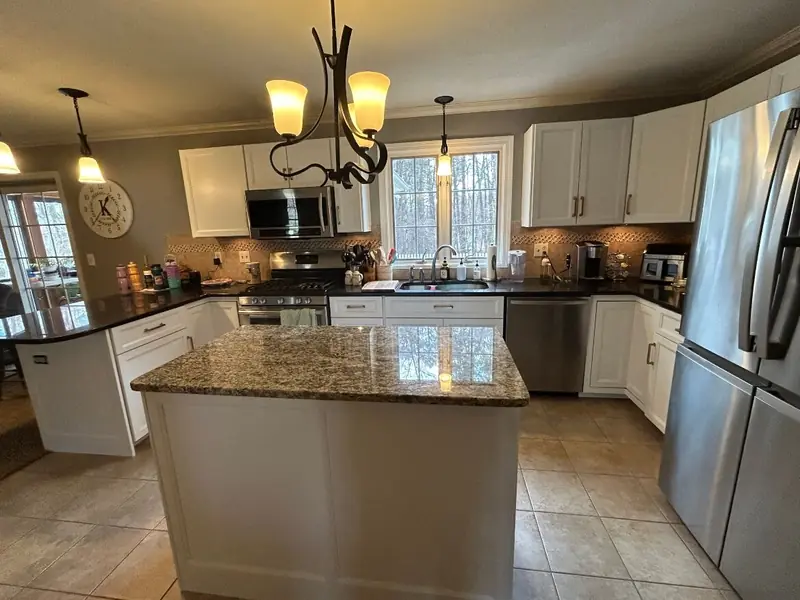
After — same boxes, refaced in white shaker. A brand-new kitchen without a remodel.
Before we arrive: emptying and prepping your kitchen
Your part starts before day one. The cabinets need to be emptied out so we can work on them, so it pays to get a head start. A few things make this go smoothly:
- Have plenty of boxes on hand. You'll be packing up the contents of every cabinet and drawer, and it always takes more boxes than people expect.
- Set up temporary shelving if you need it. If you'll need to reach everyday items during the project, a temporary shelf or folding table in another room keeps life livable.
- Empty the drawers enough to lift the fronts off. The drawer fronts have to come off the boxes, so drawers need to be emptied enough to remove them — unless you're having brand-new drawers built, in which case you'll simply pull the old drawers out, store them, and transfer your things into the new ones when the job is done.
Plan to not use the kitchen at all. The single biggest thing to arrange ahead of time is meals. Grill outdoors, use a second kitchen if you have one, or enjoy a stretch of ordering in and eating out. And remember: if you have no second sink, you'll be washing dishes in a bathroom vanity or the bathtub while the project is underway.
The refacing process, day by day
Every kitchen is a little different, but a standard refacing job follows the same rhythm. Here's the whole thing at a glance before we dig into each stage:
Day 1: doors come off, and the real work begins
Day one starts with removing all the cabinet doors and drawers. The drawers are pulled out and set aside in another part of the house, and the doors come off so we have clean, open boxes to work with. This is also when your prep pays off — the emptier the cabinets, the faster and cleaner this goes.
Most of day one is then spent prepping and sanding. This is the unglamorous, essential part: every surface that's going to receive a new face has to be cleaned and scuffed so the new material bonds permanently. Refacing lives or dies on this step, which is why we don't rush it.
Because sanding makes dust, dust control is built into the day. We erect a plastic barrier to seal the work area off from the rest of your home, and we sand with a high-quality HEPA vacuum that captures almost all of the dust right at the source. It's still an active job site, but a well-contained one.
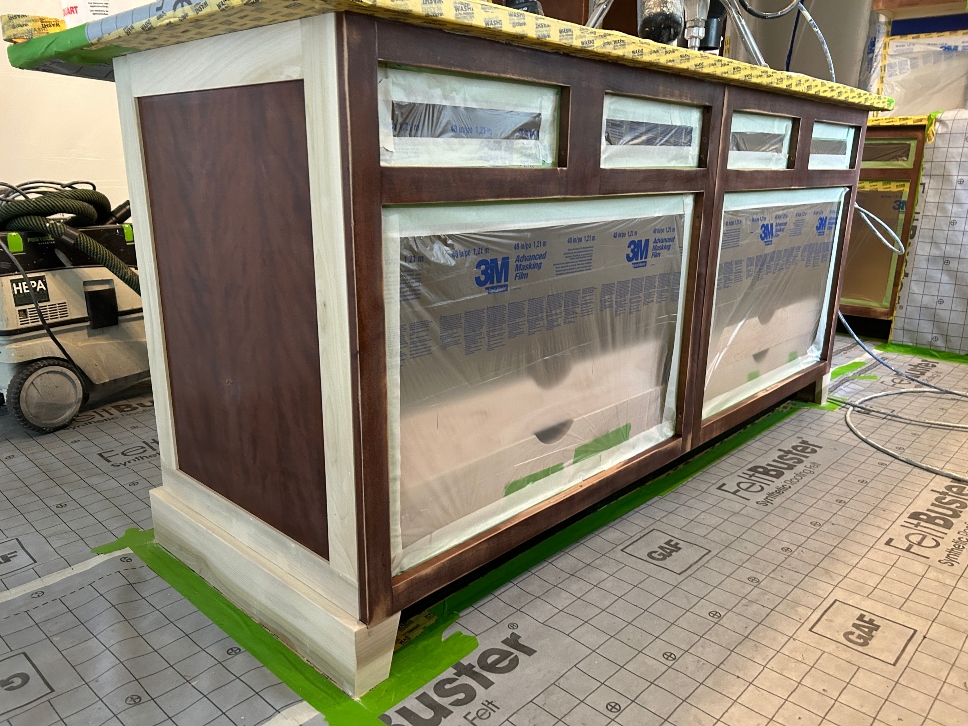
Mid-project: a kitchen island with its surfaces prepped and refacing underway. The dusty, in-between stage most homeowners never see.
Days 2 to 4: refacing the cabinet boxes
With everything prepped, the next few days are spent refacing the cabinet boxes themselves. This is where the new surface actually goes on. It covers:
- The exposed sides of the cabinets — the ends that everyone sees.
- The face frames — the strips of cabinet visible around and behind the doors.
- The moldings, baseboards and trim — so the finished look is seamless top to bottom.
How that surface is applied depends on the look you chose. For painted cabinets, we glue painted phenolic to the faces, and cabinet sides get a plywood skin where needed. For a stained, natural-wood look, we glue real wood veneers to every exposed surface, then apply stain and clearcoat to all the parts — including the new doors — so everything matches. This is the step that separates a real refacing job from a gimmick, which we'll come back to in a moment.
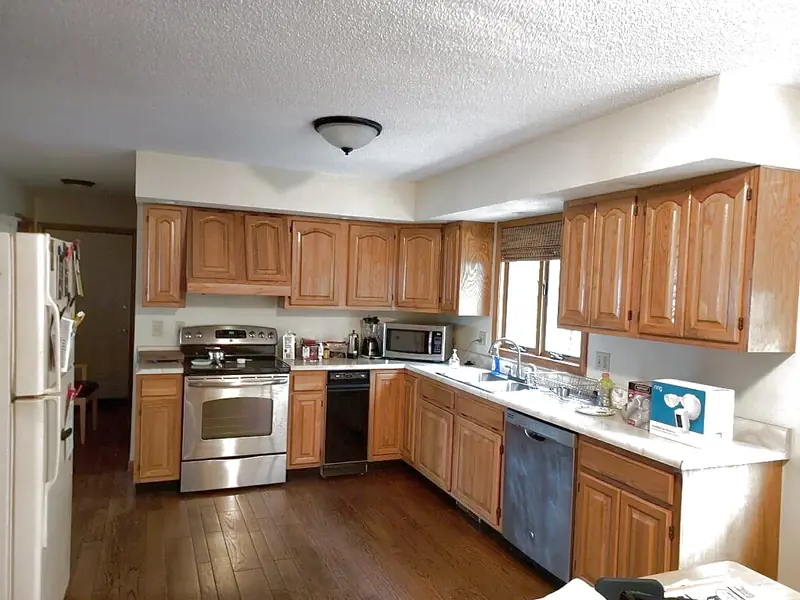
Before — tired honey oak in Chicopee, MA.
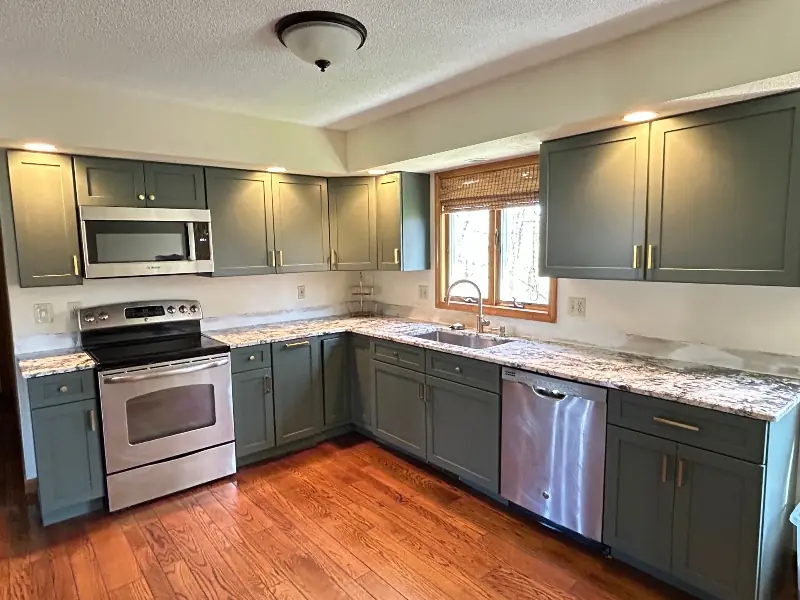
After — refaced in a green shaker. Real wood surfaces, not a sticker.
The last days: new doors, drawers and hardware
The final day or two — which lands somewhere between day four and day eight depending on the kitchen — is door and drawer installation. This is the part where it all comes together and the kitchen suddenly looks finished. The new custom doors are hung, any new drawer fronts or drawer boxes go in, and then your new handles and pulls are installed.
Hardware is the one thing we usually save for the very end. Most customers pick out their own handles and pulls, and I install them on the job once the doors are hung and everything lines up. It's a small step that makes the whole kitchen feel custom to you.
How long does the whole thing take? A basic refacing job runs about four to eight days start to finish. Adding new cabinets, or modifying existing ones, will add a day or more depending on the scope of the work. Your quote will spell out the timeline for your specific kitchen.
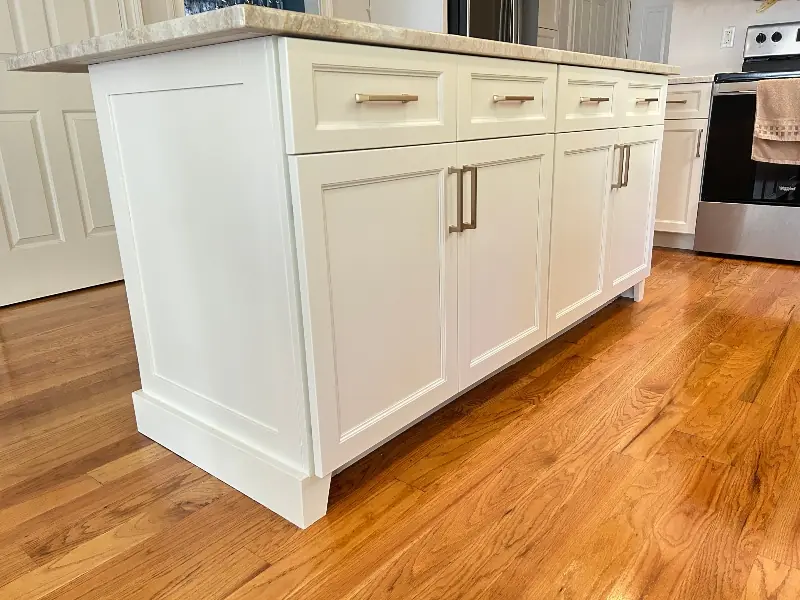
The payoff — the same island from earlier, refaced in dove white with new doors and hardware installed.
What goes into a refaced cabinet: the materials
A refacing job is only as good as the parts that go into it, and this is where the difference between a quality job and a cheap one really lives. Here's what we use and why it matters:
- Custom-built doors. The cabinet doors are all custom built with the same high-quality construction a brand-new high-end kitchen would get. They are the focal point of the finished kitchen, so they're built to that standard — not ordered off a rack.
- Real wood veneers or painted phenolic. Stained cabinets get real wood veneer glued to every exposed surface; painted cabinets get painted phenolic on the faces and a plywood skin on the sides where needed. Both are permanent, durable surfaces.
- Blum soft-close hinges. Doors are hung on Blum soft-close European-style hinges — the industry standard and top of the line.
- Solid maple drawers on Blum slides. When drawers are replaced, they're 5/8-inch solid maple boxes riding on Blum soft-close, full-extension undermount slides. That's the same hardware you'd find in a premium new kitchen.
Blum soft-close hinges — the top-of-the-line standard on every door we hang.
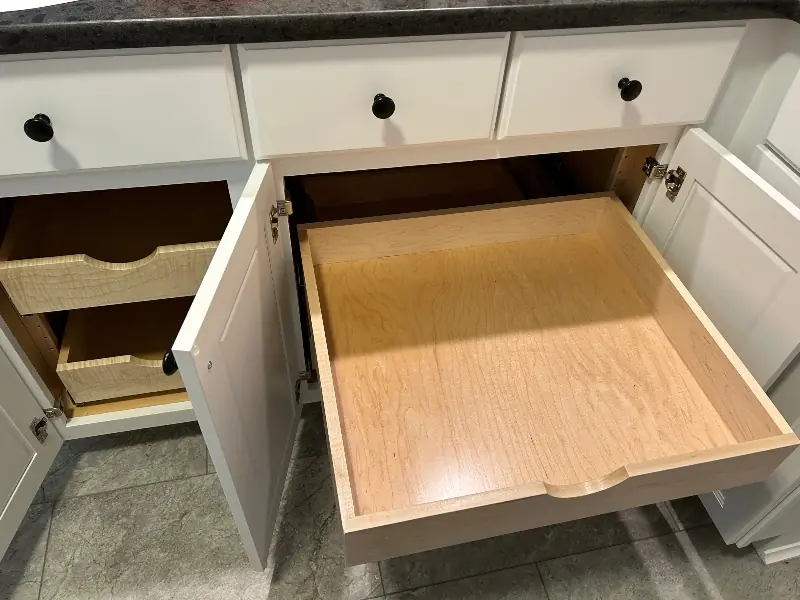
Solid maple drawer boxes on Blum full-extension slides — built like a brand-new high-end kitchen.
All of this is why refaced cabinets from a quality shop can end up more durable than inexpensive brand-new stock cabinets. You're keeping a sound box and pairing it with better doors, better surfaces, and better hardware than a lot of new cabinetry ships with. If you want to see the range of door looks this opens up, our door styles page is a good next stop.
The "peel-and-stick" myth
Here's the biggest misconception I run into: people hear "refacing" and picture someone smoothing a thin peel-and-stick veneer over their old doors. That sounds cheesy — and honestly, it would be. A good refacing job is nothing like that. It's a new, permanent surface, custom-built doors, and premium hardware. It's meant to last a long time, not to look like a quick cover-up.
The other myth is that new cabinets are always better than refacing. Sometimes that's true — if your boxes are falling apart, you should replace them. But often it isn't. Go back to the siding analogy: you don't demolish a structurally sound house because the outside looks dated. If your cabinet boxes are solid, refacing gives you a superior result without the cost and upheaval of tearing everything out. For a deeper look at that trade-off, see refacing vs. replacing.
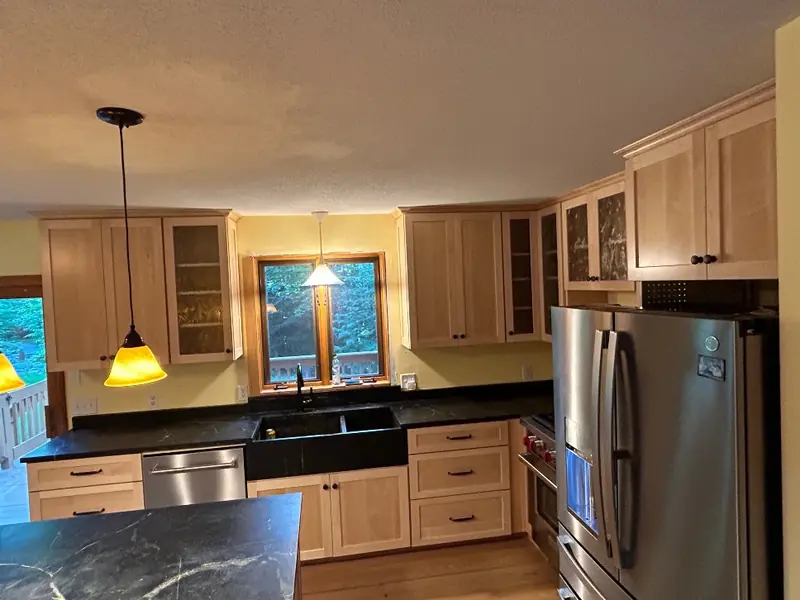
Real wood veneer — here natural maple over old oak — is a permanent surface, worlds apart from a peel-and-stick kit.
When refacing isn't the right call
Part of an honest consultation is telling you when not to reface. Because refacing renews surfaces rather than the box itself, a sound box is the whole ballgame. A couple of situations make a kitchen a poor candidate:
The good news is that most kitchens pass this test easily. If your boxes are sound, you're an excellent candidate, and refacing will very likely be the right move.
Refacing vs. new cabinets, side by side
To put it all in one place, here's how refacing compares with tearing out and installing brand-new cabinets:
| Cabinet refacing | All-new cabinets | |
|---|---|---|
| Your cabinet boxes | Kept & reused | Torn out & replaced |
| Doors & drawer fronts | New, custom-built | New |
| Hardware | Blum soft-close, full-extension | Varies by brand |
| Kitchen layout changes | Stays the same | Can be reconfigured |
| Typical time in your home | About 4–8 days | Weeks, plus demo |
| Disruption level | Moderate | Major |
| Best when | Boxes are sound, layout works | Boxes are failing or layout must change |
The honest takeaway: if your layout works and your boxes are solid, refacing gets you a new-kitchen look with far less time, mess, and cost. When you compare, compare apples to apples — refaced cabinets with superior doors and hardware against comparable custom cabinetry, not against the cheapest box-store stock.
Frequently asked questions
How long does a cabinet refacing project take?
A standard kitchen refacing runs about four to eight days from doors-off to final hardware. Day one is prep and sanding, days two through four are spent refacing the cabinet boxes, sides, and moldings, and the last day or two are door and drawer installation. Adding new cabinets or modifying the layout adds a day or more depending on the scope.
Can I use my kitchen during refacing?
Plan on not using the kitchen at all during the project. There is no running water at the sink cabinet and the space is a sealed, dusty work zone. Homeowners grill outdoors, use a second kitchen, or order in. If you have no second sink, you'll be washing dishes in a bathroom vanity or tub, so it helps to plan ahead.
Is cabinet refacing just peel-and-stick veneer?
No. A quality refacing job is nothing like a peel-and-stick kit. Exposed surfaces get real wood veneers or painted phenolic glued and finished in place, and the doors are custom-built to the same standard as a brand-new high-end kitchen. It's a new, durable surface, not a thin sticker.
What makes a kitchen a bad candidate for refacing?
Cabinets with excessive structural damage are poor candidates, because refacing renews the surfaces, not the underlying box. Sink cabinets are worth a close look, inside as well as out, since long-term water exposure can weaken the box. If the structure is sound, refacing is usually a great fit.
How is refacing different from buying new cabinets?
Refacing keeps your sound cabinet boxes and renews everything you see and touch, like putting new siding on a house instead of tearing it down. With custom doors, real wood or phenolic surfaces, and Blum soft-close hardware, refaced cabinets are often more durable than inexpensive new stock cabinets — and the right choice depends on the condition of your boxes and your goals.
What hardware comes with refaced cabinets?
Doors are hung on Blum soft-close European hinges. If drawers are replaced, they're 5/8-inch solid maple boxes on Blum soft-close, full-extension undermount slides. You pick your own handles and pulls, and they're installed on the job after the doors are hung.
Wondering if your kitchen is a good candidate? Send Raymond a few phone photos of your cabinets and you'll get an honest read on whether refacing is the right move — and a clear picture of what your project would look like, day by day. No showroom pitch, no pressure. Request a free quote or call (413) 450-0028.