The short answer
Solid wood and paint-grade MDF are the two most common cabinet door materials, and the right choice mostly comes down to one question: are you painting or staining the doors? If you're staining or leaving the wood natural, solid hardwood is the only material that shows real wood grain — MDF has none. If you're painting, paint-grade MDF (or a smooth-grained wood like maple) usually gives a cleaner, more factory-consistent painted finish than an open-grain hardwood, because there's no grain texture for the paint to telegraph through.
Homestead Cabinet Design offers both. Paint-grade MDF and maple are the most requested options for painted cabinets, while white oak, red oak, cherry, birch, and hickory are popular for a natural stained look.
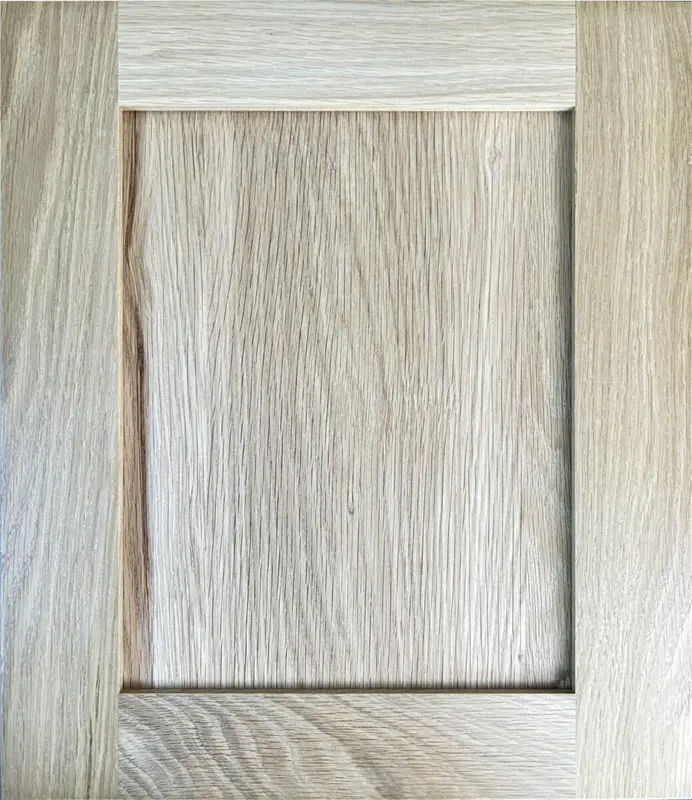
Real hardwood — oak, maple, cherry, birch, or hickory. Shows natural grain and takes stain beautifully. Every door has slight, natural variation from piece to piece.
See wood species in our door gallery →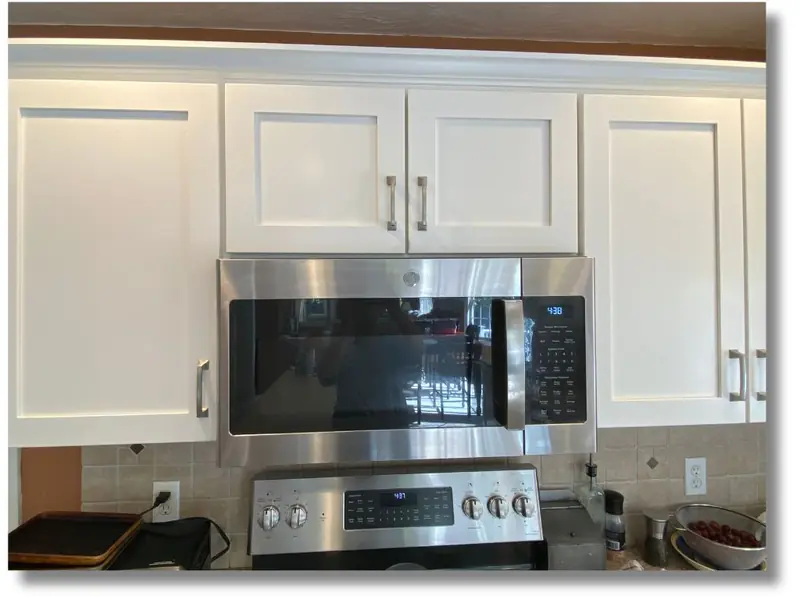
Engineered wood fiber panel with a smooth, grain-free surface. No wood movement with humidity changes, and it holds a painted finish exceptionally flat and consistent.
See our cabinet painting process →What each material actually is
Solid wood cabinet doors are milled from real hardwood — the stiles, rails, and center panel are cut from actual boards of oak, maple, cherry, birch, or another species. Grain, color, and slight character marks vary naturally from door to door, which is part of the appeal for a stained, natural-wood look.
MDF (medium-density fiberboard) is an engineered wood product made of fine wood fibers bonded under heat and pressure into a dense, uniform panel. "Paint-grade" MDF doors are factory-primed and built specifically to take a painted finish — they're not the same as the raw, unsealed MDF used in inexpensive flat-pack furniture. A quality paint-grade MDF cabinet door is fully sealed on every edge and surface before it ever reaches a kitchen.
How they compare
Both materials are legitimate choices used across the cabinet industry — the right one depends on your finish, budget, and how much natural wood character you want to see.
- Painted finish quality. MDF wins here. With no open grain to fill or telegraph through, paint dries into a smoother, more even, more factory-like surface. Solid wood can still be painted beautifully, but open-grain species like oak may need extra grain-filling to get an equally flat finish.
- Stained, natural-wood look. Solid wood wins by default — MDF has no grain, so it can't be stained to look like real wood. If you want to see wood grain, you need real wood.
- Stability. MDF is dimensionally stable and doesn't expand or contract with seasonal humidity the way solid wood can, so painted seams and panel edges are less prone to hairline cracking over time.
- Cost. Paint-grade MDF and maple are generally the most budget-friendly door options. Premium hardwoods like cherry and white oak typically cost more, reflecting the raw material and the natural variation in every board.
- Weight. MDF doors are denser and heavier than an equivalent solid wood door, which is one reason quality hinges and hardware matter regardless of which material you choose.
- Water exposure. Both materials need to be sealed and finished properly. Fully sealed, factory-primed MDF holds up well in normal kitchen conditions; the main risk for any MDF product is prolonged direct water exposure at an unsealed or damaged edge.
Side-by-side comparison
| Solid Wood | Paint-Grade MDF | |
|---|---|---|
| Best finish | Stain or natural | Painted colors |
| Visible grain | Yes — natural and varied | None — smooth and uniform |
| Typical cost | Higher, varies by species | Most budget-friendly |
| Humidity stability | Can expand/contract seasonally | Very stable |
| Painted finish look | Good, may need grain-filling | Smoothest, most factory-like |
| Species options at HCD | Maple, white oak, red oak, cherry, birch, hickory | Paint-grade MDF |
Material is a separate decision from door style. Shaker, raised panel, slab, and every other panel style can be built in either solid wood or paint-grade MDF. See our full guide to cabinet door types to choose your style first, then decide on material.
Which one fits your project?
Many Western MA refacing projects actually use both — paint-grade MDF or maple on the perimeter cabinets, paired with a stained solid wood island for contrast. See our full door style gallery for photos of both materials across every panel style, or read about shaker vs. raised panel if you're still deciding on a panel style too.
Not sure which material is right for your kitchen? Raymond brings real wood and MDF door samples to every in-home consultation so you can see and feel the difference before deciding. Cabinet refacing with new doors typically runs $12,000–$22,000 depending on kitchen size, material, and finish. Request a free consultation or call (413) 450-0028.
Frequently asked questions
Is MDF or solid wood better for cabinet doors?
Neither is universally "better" — it depends on the finish. For painted cabinets, paint-grade MDF often outperforms solid wood because it has no grain to telegraph through the paint and won't expand or contract with humidity, so painted seams and panels stay smoother longer. For stained or natural-finish cabinets, solid wood is the only real option, since MDF has no visible grain and doesn't accept stain the way real wood does.
Is MDF cheaper than solid wood cabinet doors?
Generally yes. Paint-grade MDF doors typically cost less than solid hardwood doors because the raw material is less expensive and more dimensionally consistent, which reduces waste in manufacturing. The price gap varies by wood species — cherry and white oak cost more than MDF by a wider margin than maple does.
Does MDF hold up as well as solid wood in a kitchen?
Quality paint-grade MDF cabinet doors hold up well in normal kitchen conditions and are actually more resistant to warping and cracking than solid wood, since they don't expand and contract with seasonal humidity changes. The main weak point for any MDF product is prolonged direct water exposure at unsealed edges, which is why factory-primed, fully sealed MDF doors are important — not raw MDF.
Can MDF cabinet doors be stained to look like wood?
Not convincingly. MDF has no natural wood grain, so stain sits flat on the surface instead of soaking into grain lines the way it does on real wood. MDF is built for painted finishes; if you want a stained, natural-wood look, solid wood or wood veneer doors are the right choice.
What wood species does Homestead Cabinet Design offer for cabinet doors?
Homestead Cabinet Design offers paint-grade MDF alongside solid domestic hardwoods including maple, white oak, red oak, cherry, birch, and hickory. Maple and MDF are the most requested options for painted cabinets, while oak and cherry are popular for a natural stained look.
Should I choose solid wood or MDF for my kitchen cabinet refacing project?
If you're painting your cabinets — especially white, two-tone, or any solid color — paint-grade MDF or maple gives the smoothest, most factory-like result. If you want the natural grain and warmth of real wood showing through a stain, solid hardwood is the way to go. Many refacing projects in Western MA use a mix: MDF or maple doors on painted uppers and lowers, paired with a stained wood accent like an island.