The short answer
Shaker and raised panel doors are both built the same way — as 5-piece doors with two vertical stiles, two horizontal rails, and a center panel that floats inside the frame. The only real difference is how that center panel is shaped. A shaker door has a flat, unprofiled panel set inside a plain recessed frame, for a clean, simple look. A raised panel door has a beveled or milled panel that appears to stand up, or be "raised," above the surrounding frame, for a more traditional, detailed look.
Shaker is the more popular choice today — it's the default for most cabinet refacing and remodel projects because it works in almost any kitchen. Raised panel remains the standard for colonial, formal, and classic kitchen designs where more dimension is wanted.
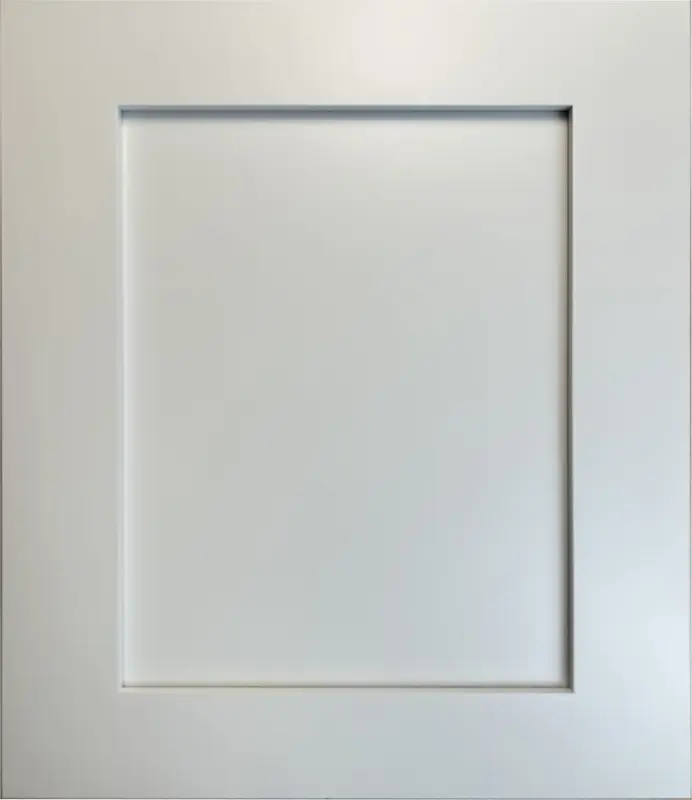
Flat center panel, plain recessed frame, no carving or moulding. Classic frame width is about 2 1/4 inches; a narrower ~1-inch version called skinny shaker is popular for a more modern, minimal look.
Full shaker door guide →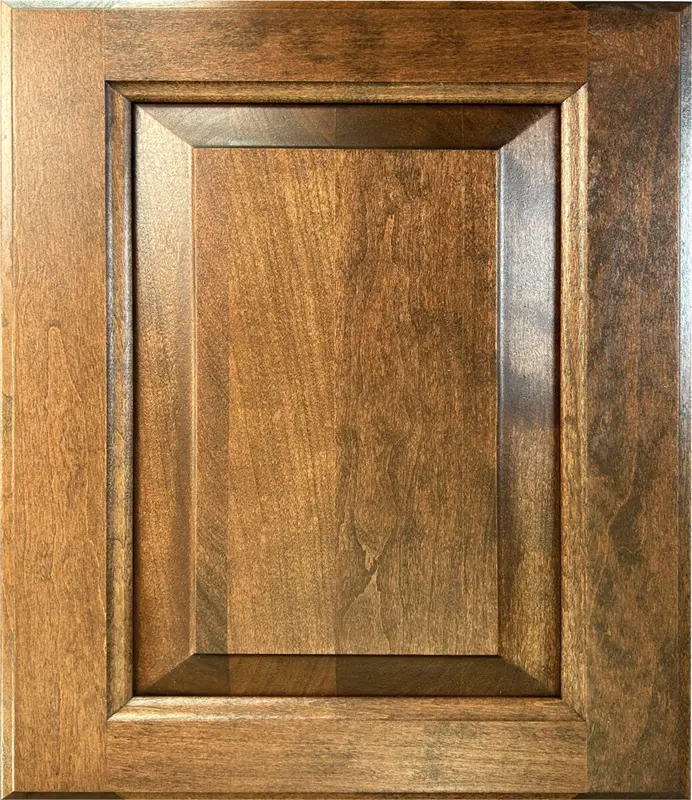
Center panel is milled with a beveled edge so it stands proud of the frame, catching natural shadow lines. The traditional, formal cabinet door — common in colonial and classic kitchen designs.
Full raised panel guide →Construction: they're built the same way
This is the part people are often surprised by: shaker and raised panel doors use the exact same 5-piece construction. Both start with the same frame of stiles and rails. The only thing that changes is how the mill shapes the center panel — flat and square-edged for shaker, beveled and contoured for raised panel. Everything else about the door (wood species, paint or stain finish, full overlay or inset mounting) is independent of which panel style you pick.
How they look and live differently
Even though the construction is the same, the two styles feel very different in a finished kitchen:
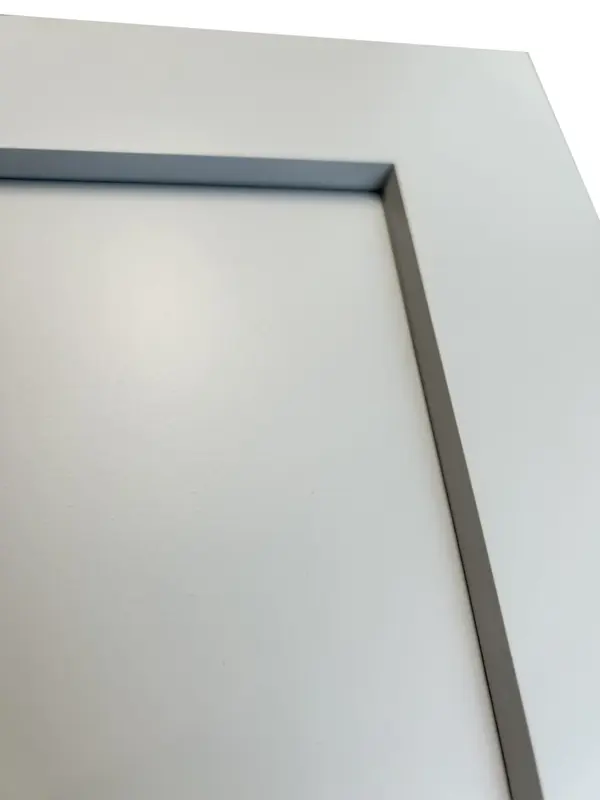
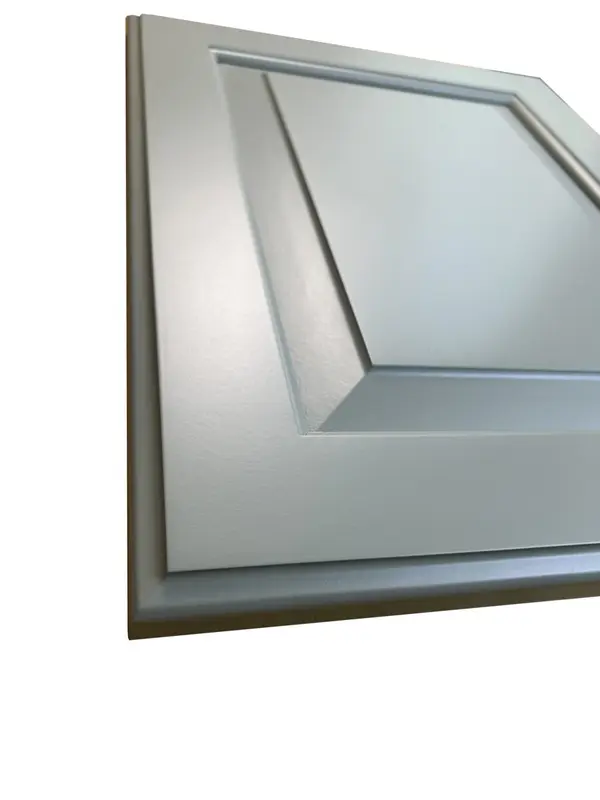
- Shadow lines. Shaker's flat panel keeps shadow lines to a minimum — clean and simple under any light. Raised panel's beveled edge creates natural shadow lines that add depth and texture, especially noticeable under cabinet lighting.
- Style range. Shaker works across farmhouse, transitional, contemporary, and modern kitchens — it's the safest, most versatile choice. Raised panel leans traditional, colonial, and formal, and pairs naturally with crown moulding and furniture-style details.
- Cleaning. Shaker's flat surface and simple frame wipe down quickly. Raised panel's contours and corners take a little more effort to keep free of grease and dust buildup.
- Finish. Shaker tends to look cleanest in a solid paint color since the flat panel lets color read evenly. Raised panel shows off more depth under a stain finish, since the profile catches light and shadow naturally — though both styles take paint or stain well.
Side-by-side comparison
| Shaker | Raised Panel | |
|---|---|---|
| Construction | 5-piece, flat panel | 5-piece, beveled panel |
| Frame width | Classic ~2 1/4″ (skinny shaker ~1″) | Varies by profile chosen |
| Style | Farmhouse to modern — most versatile | Traditional, colonial, formal |
| Best finish | Solid paint colors | Stain, or paint with a contrasting glaze |
| Cleaning | Fast — minimal grooves | A bit more detail to wipe down |
| Popularity | Most requested style nationally | Strong choice for traditional kitchens |
Mounting style is a separate decision from panel style. Both shaker and raised panel doors can be built as full overlay, partial overlay, or inset. See our overlay guide for how each mounting style looks and which one fits your cabinets.
Which one fits your kitchen?
Not sold on either? Skinny shaker (a narrower ~1-inch frame) splits the difference for a more modern take on shaker, and applied moulding adds even more traditional detail than a standard raised panel. See our full guide to all cabinet door types for the complete lineup.
Still deciding? Raymond can walk you through real shaker and raised panel door samples side by side and give an honest read on what fits your kitchen and budget. Cabinet refacing with new doors typically runs $12,000–$22,000 depending on kitchen size and door style. Request a free consultation or call (413) 450-0028.
Frequently asked questions
What's the main difference between shaker and raised panel cabinet doors?
Both are 5-piece doors built from two stiles, two rails, and a center panel — the difference is how that center panel is shaped. A shaker door has a flat, unprofiled panel set inside a plain recessed frame. A raised panel door has a panel that's beveled or milled so it appears to stand up, or be raised, above the surrounding frame.
Is shaker or raised panel more expensive?
The panel profile itself usually isn't a major cost driver — both are standard 5-piece door constructions. Price is driven more by wood species, paint vs. stain finish, door size and quantity, and whether you choose full overlay or inset mounting. Cabinet refacing with new doors typically runs $12,000–$22,000 depending on kitchen size and finish.
Can shaker and raised panel doors be mixed in the same kitchen?
They can, though most kitchens use one panel style throughout the perimeter for a cohesive look. A common way to mix them is to use raised panel or an accent style like glass or beadboard on a kitchen island while keeping shaker on the surrounding cabinetry, or vice versa.
Which door style is easier to keep clean?
Shaker's flat panel and simple frame have fewer grooves and shadow lines, so it wipes down faster and shows less dust and grease buildup over time. Raised panel's beveled profile adds visual detail but also more surface area and corners, which take a little more effort to clean thoroughly.
Does shaker or raised panel look better painted vs. stained?
Shaker tends to look cleanest in a solid paint color, since the flat panel keeps shadow lines to a minimum and lets the color read evenly. Raised panel shows off more depth and dimension under a stain finish, since the profile naturally catches light and shadow — though both styles can be painted or stained successfully.
Which style is more popular right now?
Shaker is the most requested cabinet door style nationally and the default choice for most cabinet refacing and remodel projects, because it works in almost any kitchen from farmhouse to modern. Raised panel remains a strong choice for traditional, colonial, and formal kitchen designs where more detail and dimension are wanted.