The short answer
Shaker and flat panel doors sit at opposite ends of the same idea. A shaker door is a 5-piece door — two stiles, two rails, and a flat center panel set inside a plain recessed frame. A flat panel door, more precisely called a slab door, skips the frame altogether: it's a single flat piece with no rails, stiles, or panel at all. Shaker has visible frame lines running around each door; slab is one uninterrupted surface, wood grain or paint running edge to edge.
Shaker is the most requested door style nationally and works across almost any kitchen style. Flat panel (slab) is the door that defines modern, minimalist, and European-style kitchens, and it's the easiest of any style to keep clean since there are no grooves or frame lines to collect dust and grease.
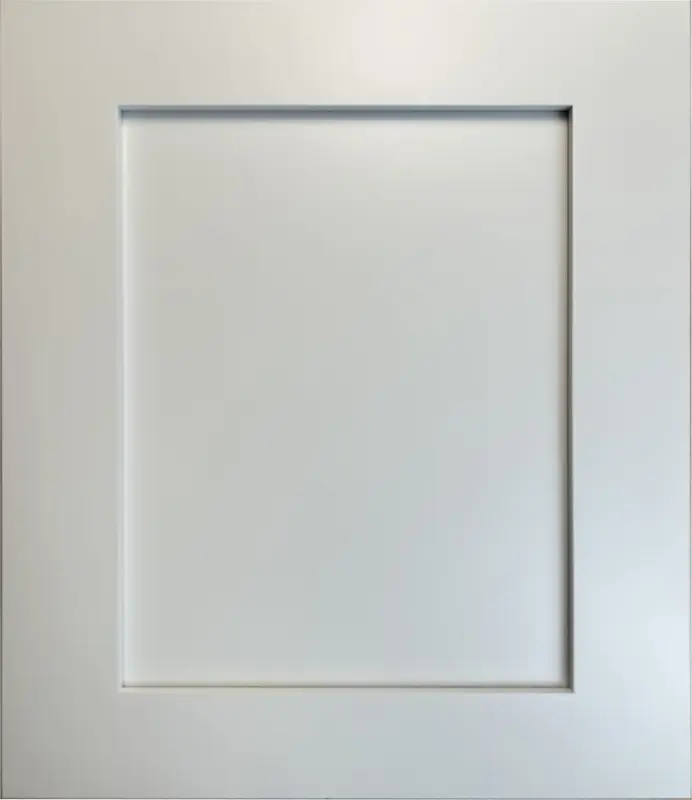
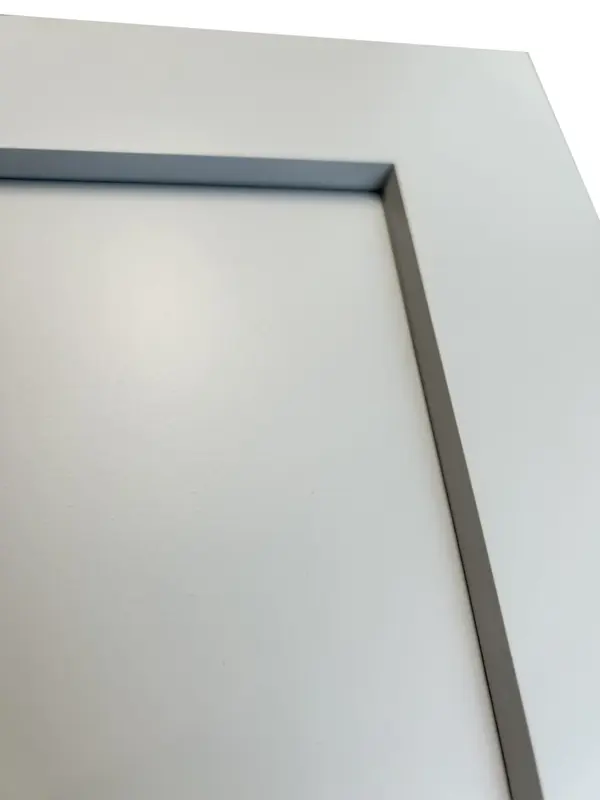
5-piece construction with a flat center panel inside a plain recessed frame. Classic frame width is about 2 1/4 inches; a narrower ~1-inch version called skinny shaker gives a more modern, minimal look.
Full shaker door guide →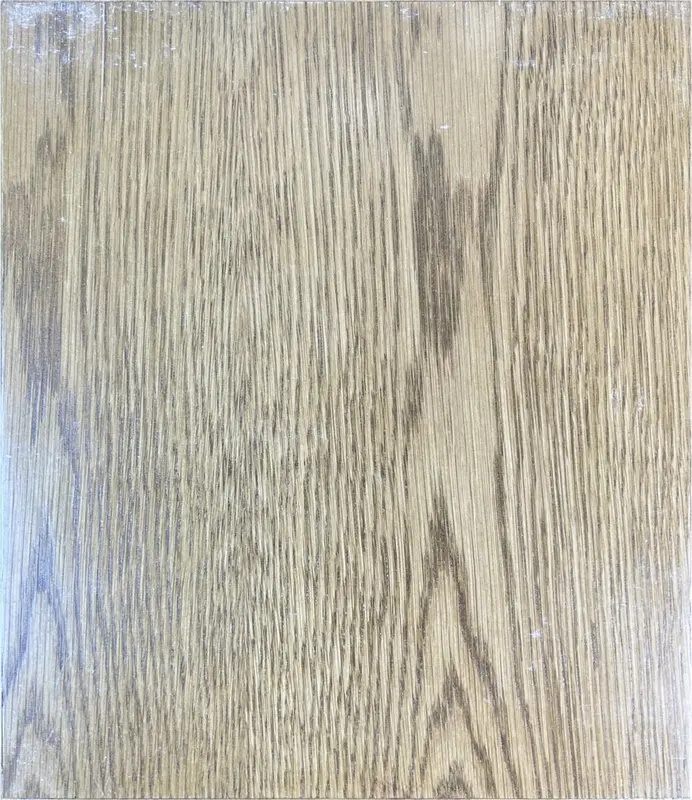
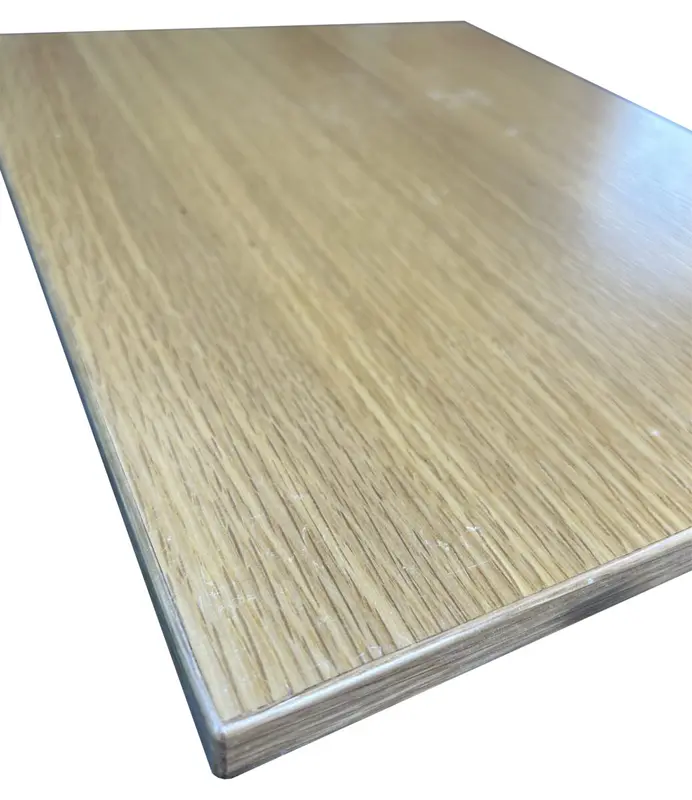
A single flat piece — no rails, no stiles, no recessed panel. Nothing interrupts the wood grain or paint color. The defining door style of modern, minimalist, and European-style kitchens.
Full slab door guide →The terminology mix-up: is "flat panel" the same as "slab"?
Mostly, yes — and this is the part most homeowners searching "shaker vs. flat panel" actually want answered. When people say flat panel cabinet doors, they almost always mean a slab door: one completely flat face with no frame at all. But strictly speaking, cabinet-industry terminology also uses "flat panel" to describe a framed door whose center panel is flat and unprofiled — which technically describes a shaker door's panel too.
So if you want the fully flat, frameless look, the unambiguous word is slab. If you want a flat panel with a frame around it, you're describing shaker. And if you want something in between the two, a skinny shaker narrows that frame down to about an inch, splitting the difference.
How they look and live differently
Once the construction difference is clear, the day-to-day differences follow naturally:
- Visual lines. Shaker's frame creates a subtle grid across the cabinet face — a rail and stile around every door and drawer. Slab removes that grid entirely, so a full run of cabinets reads as one continuous plane.
- Style range. Shaker works from farmhouse to modern, which is why it's the safest, most versatile default. Slab leans hard into modern, minimalist, and European-style kitchens — it's a more deliberate design statement.
- Wood grain. On a shaker door, the frame breaks the grain into segments. On a slab door in a species like red oak or white oak, the grain runs edge to edge with nothing interrupting it.
- Cleaning. Slab is the easiest door style to wipe down of any style we offer — no grooves, no corners, nothing for grease or dust to settle into. Shaker is close behind, well ahead of raised panel or applied moulding.
Side-by-side comparison
| Shaker | Flat Panel (Slab) | |
|---|---|---|
| Construction | 5-piece, framed, flat panel | One flat piece — no frame |
| Frame width | Classic ~2 1/4″ (skinny shaker ~1″) | No frame |
| Style | Farmhouse to modern — most versatile | Modern, minimalist, European |
| Best finish | Solid paint colors | Natural/clear-coat to show grain, or solid paint |
| Cleaning | Fast — minimal grooves | Fastest — no grooves at all |
| Popularity | Most requested style nationally | Defining style of modern kitchens, trending up |
Mounting style is a separate decision from door style. Both shaker and slab doors can be built as full overlay, partial overlay, or inset — full overlay is especially common with slab since it gives that signature seamless, uninterrupted face. See our overlay guide for how each mounting style looks.
Which one fits your kitchen?
Not sold on either extreme? Skinny shaker (a narrower ~1-inch frame) leans toward slab's minimalism while keeping a frame, and pairing slab drawer fronts with shaker doors is a popular middle ground. See our full guide to all cabinet door types for the complete lineup, including raised panel, beadboard, reeded, and glass.
Still deciding? Raymond can walk you through real shaker and slab door samples side by side and give an honest read on what fits your kitchen and budget. Cabinet refacing with new doors typically runs $12,000–$22,000 depending on kitchen size and door style. Request a free consultation or call (413) 450-0028.
Frequently asked questions
What's the main difference between shaker and flat panel cabinet doors?
A shaker door is a 5-piece door: two stiles, two rails, and a flat center panel set inside a recessed frame. A flat panel (slab) door skips the frame entirely — it's a single flat piece with no rails, stiles, or panel at all. Shaker has visible frame lines; slab is one uninterrupted surface.
Is flat panel the same thing as slab?
Mostly, yes. Most people searching for flat panel cabinet doors mean a slab door — a completely flat, frameless door face. In cabinet-industry terms, flat panel can also describe a framed door whose center panel is flat, which technically includes shaker. If you want the fully flat, frameless look, the unambiguous term is slab.
Is shaker or flat panel more expensive?
Neither style is inherently more expensive on its own. Price is driven mainly by wood species, paint vs. stain vs. clear-coat finish, door size and quantity, and whether you choose full overlay or inset mounting. Cabinet refacing with new doors typically runs $12,000–$22,000 depending on kitchen size and finish.
Which is easier to keep clean, shaker or flat panel?
Flat panel (slab) doors are the easiest to clean of any door style since there's no frame, groove, or panel edge for dust and grease to collect in. Shaker is close behind — its flat panel and simple recessed frame have far fewer grooves than a raised panel or applied moulding door.
Can shaker and flat panel doors be mixed in the same kitchen?
Yes, though most kitchens use one door style throughout the main cabinetry for a cohesive look. A common approach is pairing slab drawer fronts with shaker doors, or using slab on a kitchen island while keeping shaker on the surrounding perimeter cabinets.
Which style is more popular right now?
Shaker is still the most requested cabinet door style nationally and works in almost any kitchen from farmhouse to modern. Flat panel (slab) is the defining door style of modern, minimalist, and European-style kitchens and has been gaining popularity as that look trends upward.