The short answer
Clear shows everything, seeded softens the detail, and frosted shows only shapes and color. All three are add-ons to made-to-order doors.
A glass panel turns a plain upper cabinet into display space, and it is one of the few door upgrades that changes how a kitchen feels rather than just how it looks. But the glass you pick decides whether that cabinet reads as a showcase or a quiet accent, and whether you will be restacking plates every Sunday night.
This guide covers the glass inserts we offer for cabinet doors (clear, seeded and frosted), how each one behaves once the shelves are loaded, and how to match the glass to the kitchen you actually live in. If you are still deciding on the door itself, start with our guide to types of cabinet doors.
How a glass cabinet door is built
A glass door keeps the framed construction of a regular five-piece door, with two stiles and two rails. The only change is the center: a glass panel takes the place of the wood panel. The frame matches whatever door style runs through the rest of your kitchen, so a shaker kitchen gets shaker glass doors and the new uppers blend right in.
That construction is also why slab doors cannot take glass. A fully flat slab has no frame to hold the pane. Everything else in the door style lineup that has a frame can. The glass can run as one clean sheet, or be divided into smaller lites by wood mullions. Our glass cabinet doors page shows single-pane and mullion examples side by side.
The glass types, one by one
A plain, see-through pane. Everything on the shelf is visible, which is the point: it suits glassware, good dishes and collections. The trade-off is that the inside of the cabinet becomes part of the room, so the shelves need to stay tidy.
Glass with a textured, slightly rippled surface that breaks up and distorts the view. You still see what is inside, but crisp detail turns soft. It has an older, handmade character that suits farmhouse and traditional kitchens.
A diffused, translucent pane. You see light, shapes and color, but no detail. It is the most forgiving choice when the cabinet holds everyday items, and it still gives you the lighter, open feel of glass on an upper.
Reeded and fluted doors get their ridged look from machined wood panels, not a glass insert. If you like the texture of reeded glass, a reeded wood door on an island or a few accent cabinets is the closest thing we build.
The same shelf behind three kinds of glass. The more the glass diffuses the view, the less the contents matter.
Single pane or mullions?
Glass type and glass layout are separate decisions. A single pane is the quieter choice: one uninterrupted sheet that puts the focus on what is displayed. Mullion doors divide the glass with wood bars, either in a classic grid that reads like a paned window or in decorative patterns with curves and overlapping shapes. Mullions are finished to match the door frame, so painted kitchens get painted mullions and stained kitchens get matching wood.
The two choices interact. Seeded glass already adds visual texture, so it tends to look best in a simple single pane or a plain grid. Clear glass is the one that carries a decorative mullion pattern best, because nothing competes with the lines.
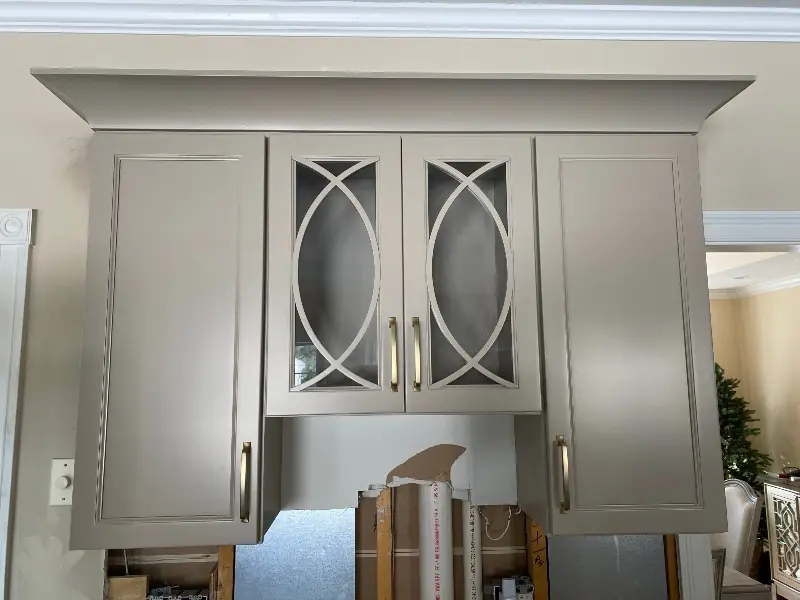
Glass uppers with a decorative mullion pattern. The wood bars are finished with the frame, so the whole door reads as one piece.
Glass cabinet doors →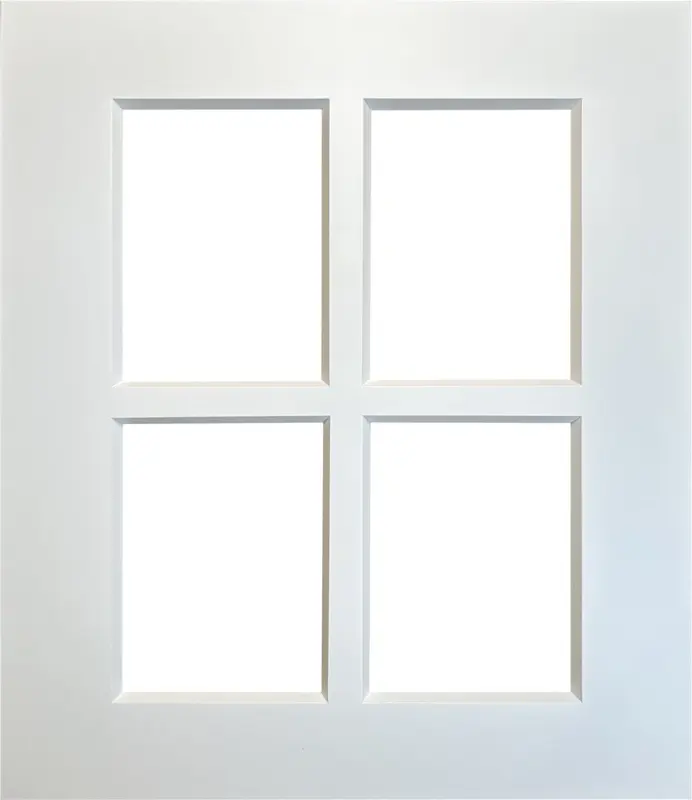
A chamfered-frame door with a glass center panel. Any framed door style can take glass in place of its wood panel.
Replacement cabinet doors →Quick comparison
| Glass | What you see | Hides clutter | Best for |
|---|---|---|---|
| Clear | Everything, in full detail | No | Styled shelves, glassware, collections |
| Seeded | Contents, softened and distorted | A little | Farmhouse and traditional kitchens |
| Frosted | Shapes and color only | Most | Everyday storage, busy households |
Where glass belongs in a kitchen
Glass is most at home on upper cabinets. A pair of glass doors flanking a range hood or a window breaks up a long run of solid doors and gives the room a focal point. Glass is also a natural fit for hutches and china cabinets. Most kitchens only need a few glass doors among solid ones, so the glass reads as an accent, not a pattern of holes.
It is also a popular upgrade during cabinet refacing or a door replacement, since the new doors are being made anyway and each one can be solid or glass. Your cabinet boxes stay in place.
Which one should you actually choose?
Not sure which glass fits your kitchen? Send Raymond a photo of the cabinets you are looking at. He will tell you what makes sense, whether it is glass, solid doors, or a mix. Request a free consultation →
Frequently asked questions
What types of glass can go in cabinet doors?
We offer clear, seeded and frosted glass inserts for cabinet doors. Clear shows everything inside, seeded has a textured, slightly distorted look that softens detail, and frosted diffuses the view so you see only shapes and color. Glass is an add-on to made-to-order doors, set in any framed door style, as a single pane or divided with mullions.
Is reeded glass an option for cabinet doors?
Reeded is a door style we make in wood, with continuous vertical ridges machined into the center panel, rather than a glass insert. Our glass inserts are clear, seeded or frosted. If you like the texture and light play of reeded glass, a reeded wood door on an island or accent cabinets is the closest match we build. See our reeded and fluted door styles.
Which glass is best for hiding a messy cabinet?
Frosted glass hides the most because it diffuses everything behind it into soft shapes and color. Seeded glass hides some detail but still shows what is inside. Clear glass hides nothing, so it works best when the shelves are styled with dishes or glassware you want to show off.
Can glass be added to any cabinet door style?
Glass goes into any framed five-piece door, such as shaker or chamfered, because the glass takes the place of the wood center panel. Fully flat slab doors have no frame to hold glass. Every glass door is made to order, so the frame matches the rest of your kitchen in style, species and finish.
Can you put glass in my existing cabinet doors?
Glass doors are built as new, made-to-order doors rather than cut into old ones, so the usual route is replacement doors or cabinet refacing. Mixing a few glass uppers in among solid doors is a common upgrade at that point. If you are not sure what you have, send Raymond a photo and he will tell you what makes sense.
Do glass cabinet doors work with inset and overlay?
Yes. Glass doors follow your kitchen's mounting style, whether full overlay, partial overlay or inset. Our overlay guide explains how each one changes the look.
Related: Glass cabinet doors · Reeded & fluted doors · All door styles · Replacement cabinet doors