The short answer
Measure the opening, not just the old door. Then decide how the new door will sit: full overlay and partial overlay doors are larger than the opening, inset doors are slightly smaller. Skip the overlay question and you can order a full set of doors that all fit the wrong way.
Ordering replacement cabinet doors is easy to get wrong in one specific way: people measure the old door, order the same size, and discover the old door never matched what they wanted the new kitchen to look like. This guide walks through the order of operations so the numbers come out right the first time.
If you'd rather not do it yourself, that's what the free consultation is for, and measuring is part of it. If you'd like to understand what's being measured, or you're getting quotes to compare, read on.
What you need
- A metal tape measure that reads in sixteenths of an inch. Cloth tapes stretch.
- A pencil and a sketch of your kitchen. Number every door and drawer on the sketch so your measurements match up later.
- Your phone camera. A photo of each hinge and each open door saves a lot of guessing.
- Ten minutes per wall if you go slowly. Rushing is where most mistakes come from.
Step 1: See how your doors sit now
Before any measuring, close a door and look at where it lands. There are only three possibilities, and the rest of the process depends on which one you have.
Looking down on the edge of a cabinet frame. The farther a door reaches onto the frame, the larger it has to be for the same opening.
- Full overlay — the door covers nearly the whole face frame, with only narrow gaps between doors.
- Partial overlay — the door covers part of the frame, leaving visible bands of frame between and around the doors. Common on older kitchens.
- Inset — the door sits inside the opening, flush with the frame.
Frameless cabinets (no face frame) are measured against the cabinet box instead, but the same three ideas apply. The full comparison is in our cabinet door overlay guide.
Step 2: Measure the opening, not the door
Open the door you're replacing, or take it off, and measure the empty space it covers. This is the dimension that doesn't change no matter what door style you choose.
A and B are the two numbers everything else is built on. Measure them in more than one place, and write down the smallest.
- Width (A): measure edge to edge of the open space at the top, middle, and bottom. Write down all three.
- Height (B): measure at the left, middle, and right. Write down all three.
- Use the smallest number in each direction. A frame that's a sixteenth wider in one spot is normal; a door sized to the biggest number will be too big somewhere else.
- For double doors, measure across the whole opening that both doors cover, not each door.
Step 3: Add the overlay (or subtract the reveal)
This is the step that decides the finished size. Overlay is how far the door reaches onto the frame on each side of the opening. Here are the formulas the numbers follow. They're a starting point, and the exact figures get confirmed on the final measure.
| Door style | Single door | Pair of doors, each |
|---|---|---|
| Full overlay | Opening + (2 × overlay) | (Opening width + 2 × overlay − gap) ÷ 2 |
| Partial overlay | Opening + (2 × overlay), usually a smaller overlay than full | (Opening width + 2 × overlay − gap) ÷ 2 |
| Inset | Opening − the reveals (about 1/8″ per side is typical) | (Opening width − 3 reveals) ÷ 2 |
The "gap" is the small space between two doors that meet in the middle, commonly around 1/8″. Height is calculated the same way as width. For inset, the reveals above and below the door count too.
A worked example. Say the opening is 14″ wide and 30″ high, and you want a single door at a 1/2″ overlay on every side. The door would be 14″ + (2 × 1/2″) = 15″ wide and 30″ + 1″ = 31″ high. For an inset door in the same opening, you'd subtract about a quarter inch in each direction instead.
Step 4: Cross-check against the old doors
Now measure the old doors anyway: width and height, edge to edge. If you're replacing like for like, the old door should land very close to what the formula says. A big difference means one of three things: you measured an opening wrong, the original doors were never sized well, or the old doors had a different overlay than you assumed.
And if you're changing the look, the old door size isn't the right number to order from at all. Refacing and door replacement commonly convert a partial-overlay kitchen to full overlay, which makes the new doors larger than the ones coming off. That's often the change homeowners notice first, because the frame all but disappears and the kitchen looks newer.
Step 5: Write down what a supplier needs
Dimensions are only part of a door order. Replacement doors are made to order, so every detail you leave off is something someone has to chase down later.
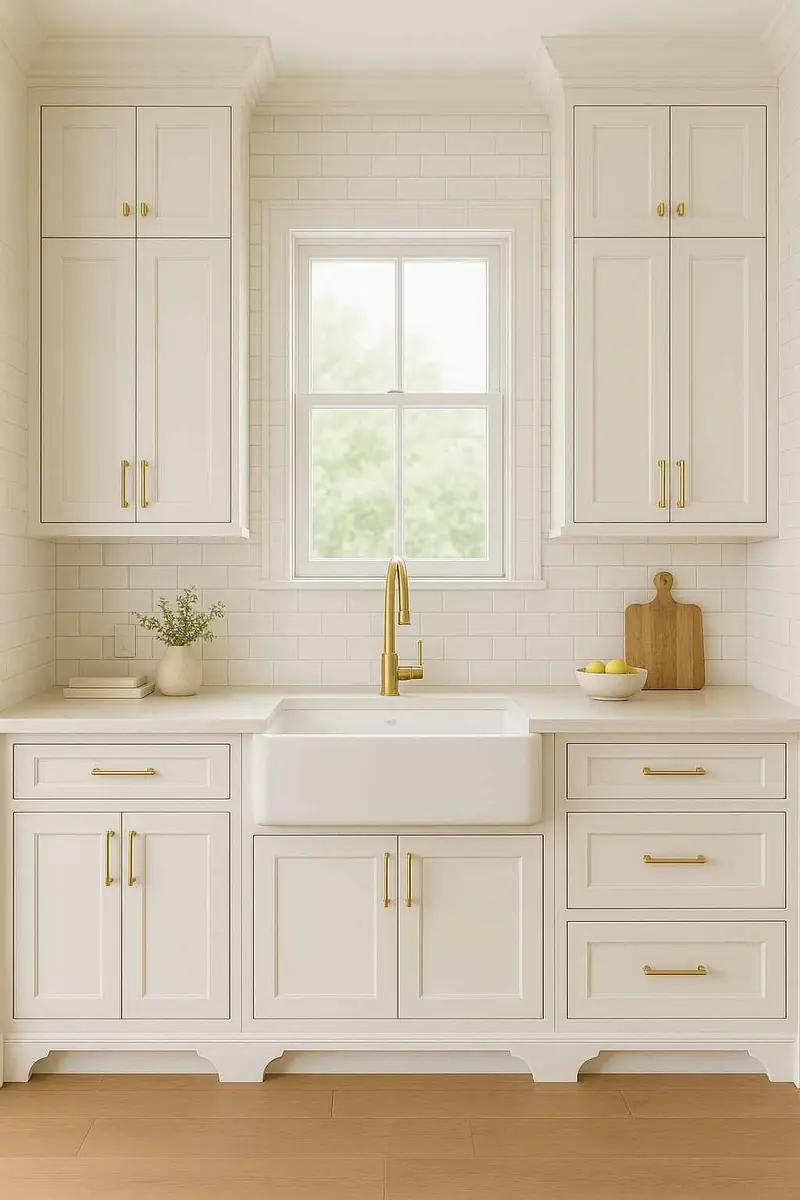
Inset doors sit inside the opening with a small even reveal all around, so tolerances are tighter than overlay.
Inset cabinet doors →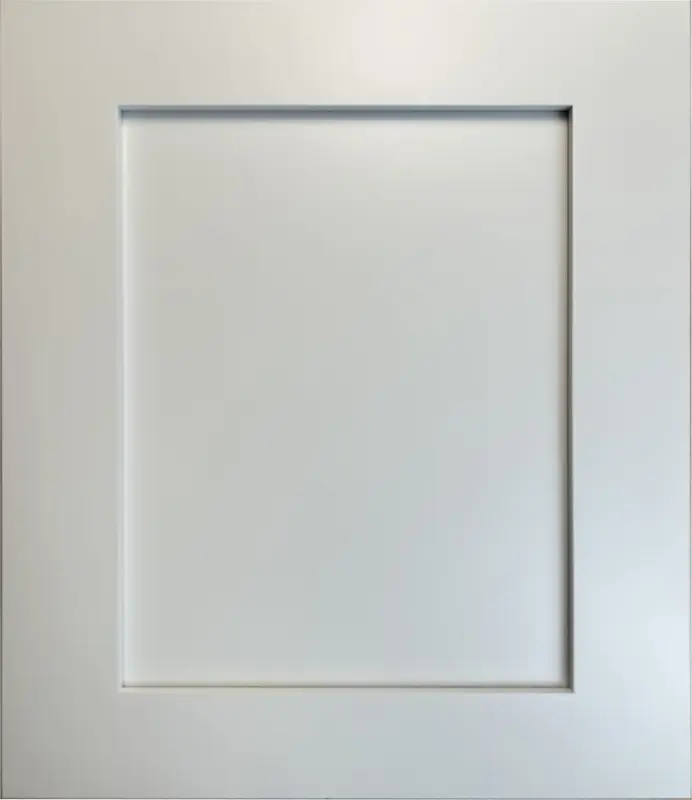
An overlay door is larger than the opening. A little extra overlay means less visible frame and a more current look.
Shaker cabinet doors →Common measuring mistakes
The old door tells you how the old kitchen was built. If you're changing overlay, it's the wrong number to order from.
Openings drift out of square over the years. Measure three places in each direction and use the smallest.
A door that's an eighth of an inch off shows in every reveal on the wall. Go to the nearest sixteenth.
They're separate openings with their own sizes. A set of doors with no drawer fronts is half a kitchen.
The hinge decides how the door sits. Changing overlay or going inset can mean changing hinges too. See types of cabinet hinges.
Size, style, and finish all move the price. See what to expect in the cabinet door replacement cost guide.
Rather have it measured for you? Measuring is part of our free consultation, and replacement doors are made to order and color-matched to your existing cabinets. Request a free consultation or call (413) 450-0028. You can also see how it works on our replacement cabinet doors page, or look at cabinet refacing if you want the whole kitchen refreshed.
Frequently asked questions
How do you measure cabinet doors for replacement?
Measure the cabinet opening, not just the old door. Record the opening's width and height at several points, work out whether your cabinets are full overlay, partial overlay, or inset, and then add the overlay amount for the door style you want. For inset doors you subtract a small reveal instead. Measuring the old door is a useful cross-check, but it only gives the right answer if the new door will sit on the cabinet the same way the old one did.
How do I measure for new cabinet doors if I want a different overlay?
Measure the opening and decide the overlay first. A common upgrade is converting partial overlay doors to full overlay, which means the new doors are larger than the old ones. In that case the old door size is the wrong number to order from. See the cabinet door overlay guide for how the three styles compare.
What is the difference between measuring full overlay and inset doors?
Full overlay doors sit on top of the face frame and cover most of it, so the door is larger than the opening by the overlay on each side. Inset doors sit inside the opening, so the door is slightly smaller than the opening, leaving a small even reveal all around. The measurement is the same; the arithmetic after it is opposite.
How much gap should there be between cabinet doors?
A small, even gap, commonly around 1/8 inch, between neighboring doors keeps them from rubbing and gives clean lines. Concealed European hinges have adjustment screws that let an installer fine-tune each reveal after the doors are hung. Reveals only look even if the doors are sized accurately to begin with.
Do I need to measure drawer fronts too?
Yes. Drawer fronts are measured separately because they follow their own openings and are often a different style from the doors. Each one needs a width and height, and you should note whether you want a slab or a five-piece style. More on that in our drawer front guide.
What if my cabinet openings are not square?
Older cabinets and face frames are rarely perfectly square. Measure each opening at the top, middle, and bottom for width and at the left, middle, and right for height, and write down the smallest number. Slightly out-of-square openings are normal and are handled with hinge adjustment, but a significantly out-of-square one is worth having someone look at in person.
Can Homestead Cabinet Design measure for me?
Yes. Measuring is part of the free consultation, which saves you from ordering a full set of doors that are off by an eighth of an inch. Replacement doors are made to order and color-matched to your existing cabinets. Call (413) 450-0028 or request a free consultation, and see our replacement cabinet doors page for how the process works.